Wednesday, September 29, 2010

Why Do We Finish the Torah on Shemini Atzeres?

Why do we read both the end of the Torah and the beginning of the Torah on Shemini Atzeres which in reality is also the day of Simchas Torah and the way it is celebrated in Israel? Why not do it on Shavuos - the day the Torah was given to us?

Rabbenu Bachaye answers the question. He compares the seven days of Sukkos to the seven days of Pesach. The 8th day - Shemini Atzeres - is compared to Shavuos. The Ramban describes the counted 50 day period between Pesach and Shavuos as the ‘Chol HaMoed’ between them. It is for this reason that Chazal call Shevuos - Chag Ha’Atzeres. The same name used for the 8th day of Sukkos. This - says Rabbenu Bachaye - teaches us that the 8th day of the Chag (holiday) is equivalent to Matan Torah – the day we received the Torah.

Added to that is what the Eglei Tal says. There are some who say that if one learns Torah deeply because he enjoys it and rejoices in it… that is not considered learning Torah L’Shma – for its own sake. This attitude is a mistake. On the contrary says the Eglei Tal. The primary Mitzvah of learning Torah L’Shma is to rejoice in it. Because only then will it be absorbed it into one’s blood and be attached to it.

Therefore success in Torah learning is directly related to one’s Simcha – one’s joy. There is no greater time to appreciate that than Z’man Simchasenu the descriptive name given to the entire Yom Tov of Sukkos all the way through Shemini Atzeres. We rejoice - with the Torah.

Since we are already in a state of joy from the Chag which is maintained as we complete the yearly Torah reading cycle and return immediately to the beginning of that cycle - it helps to assure that we will be successful in our own Torah studies during the coming year.

Taken from Torah L’Daas

Tuesday, September 28, 2010

Israel Under Siege – by Jews!

There is a troubling development occurring in the Jewish world over the past few years that has led to an unprecedented phenomenon in my lifetime. I believe it is the cause one of the biggest divides among the Jewish people since the advent of Reform Judaism. But this time the split is not theological. It is political. I’m talking about Jewish attitudes toward the State of Israel.

Not that there hasn’t been any controversy in Jewish circles on this issue in the past- even within Orthodoxy itself. One need only look at Satmar and religious Zionism to see Polar opposite views about the State. In fact one might be tempted to say that there are as many views about the State of Israel as there are Jews in the world.

But whatever those differences might be – except for a few radical elements that are out of the mainstream of Orthodoxy- most Orthodox Jews have been united with our non Orthodox brethren in generally supporting the State in how they defend themselves and in their cautious approach to peace.

Even among the most religious of circles where criticism of the State of Israel has at times been vehement it has always been internal. When it came to attacks from the outside - the vast majority of us - whether religious or not - stood united in defense of it. We all saw attacks against Israel as attacks against the Jewish people. When Israel was attacked – we were all attacked.

That has changed.

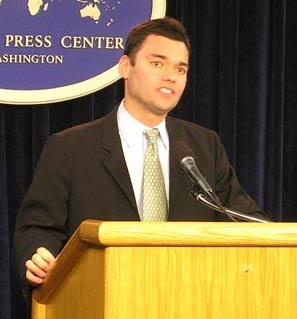
A fellow Jew by the name of Peter Beinart (pictured) has famously articulated this unfortunate new phenomenon in a recent article. He argues that one’s Judaism which he claims is guided by liberal principles are in stark contrast with the views of the current Israeli leadership. The traditional knee-jerk automatic support that we Jews always seem to give to Israeli actions – is in conflict with our liberalism.

Support for current Israeli like actions by other governments would normally garner our condemnation. We cannot - he argues – be inconsistent with ‘our liberalism’. Criticism we apply to other governments must be applied equally to Israel. He concluded that we ought to consistent when Israel departs from liberal values. As such we have an obligation to be just as hard on Israel as any other government.

If I understand correctly this is in fact the philosophy of J-Street – a new movement of Jews whose support of Israel is based on principles of liberalism and whose support is not automatic.

I agree that supporting an Israeli government that is not in concert with one’s political philosophy is an inconsistency. But to equate Jewish values to liberal values as Peter Beinart seems to do is the height of arrogance – if not complete ignorance. Just as it would be if someone tried to equate Judaism with political conservatism. The truth is that Judaism cannot be classified either way. It has elements of both - and rejects elements of both. Judaism is a way of life based on the principles of the Torah – independent of political viewpoints.

This new attitude is indicative to me of the bankruptcy of non Orthodox Jewish education. It is an education that is woefully lacking in actual Torah content to see Judaism in only liberal terms. They have little or no knowledge of the Talmud - our repository of Jewish law, tradition, and philosophy. At best their knowledge of the Talmud is limited to only its expressions of liberal values.

It is a sad fact of reality that generations of non Orthodox Jews have been weaned on political liberalism and believe it to be the essence of their religion. Liberalism seems to have replaced the Bible as Peter Beinart’s article demonstrates. This has caused a split of unprecedented proportion among the Jewish people. We now have sincere Jews who are saying and even doing the kinds of things that in the not too distant past were said and done only by our enemies.

This is why we have artists supporting boycotts. And ships full of Jews trying to break a blockade of Gaza. This is how one can end up with a Jewish and respected former judge - whose daughter lives in Israel - issuing a condemning UN report about how Israel conducted its most recent military defensive action in Gaza.

This attitude has also given rise – and license to non Jews to heap even more outrageous condemnation of Israel under the ‘cover’ of liberal Jews who say the same thing. Most recently in a disgusting ‘Pink Floyd’ video wherein ‘Roger Water’s performance of 'Goodbye Blue Sky' (were) accompanied by images of planes dropping bombs in the shape of Stars of David and dollar signs…’

He cannot be accused of anti Semitism when there are so many Jews who basically agree with him!

The rampant and virulent anti Israel attitudes that have dominated university campuses in recent years where many young Jewish minds are influenced against Israel could not have happened if these young Jews had a proper Jewish education.

But their lack of it combined with a politically liberal indoctrination from their parents and heterodox rabbis surely contributes to this phenomenon and has legitimized rhetoric approaching anti Semitism - from university educators who are themselves liberal and strongly supportive of the Palestinian cause while de-legitimizing the Israeli cause.

I don’t know what to do about this phenomenon. It is truly a sad development that does not bode well for Israel’s well being. Israel cannot afford to make decisions under siege – even if it is only a verbal siege. And it is becoming much more than verbal as boycotts and the like are beginning to pop up.

Nor does it bode well for the well being of the Jewish people when Israel is so harshly criticized from so many different corners of the world -increasingly including many respected Jews. Because when Israel is condemned we are all in the same boat. We are one people and that is the boat we should be in.

Monday, September 27, 2010

Of Zealotry and Chilul HaShem

There was a march through the streets of Meah Shearim planned by non Charedi women to protest discrimination against women in that neighborhood during the week long Simchas Beis HaShoeva celebrations. These celebrations take place during the week of Sukkos.

Simchas Beis HaShoeva is celebrated by song and dance throughout the Jewish community by many Orthodox institutions (Shuls; Yeshivos; Kollelim)– irrespective of the Hashkafos. Most often during Chol HaMoed when bands are hired to enhace the dancing.

This is done to commemorate the annual practice on Sukkos in the Beis HaMikdash of Nisuch HaMayim. Water was poured onto the Mizbeach (alter) when the Korban Tamid Shel Shacharis - the daily morning sacrifice was offered. This was done with much rejoicing and dancing by the people gathered there to witness it.

The protest was supposed to have taken place last Friday. If it did I haven’t heard about it. I suppose that’s a good thing since if there was any violence it would have been reported by the media. But I would have been opposed to it in any case. Why incite a bunch of zealots who are consumed with Tznius issues – among other things?!

The protest was about a proposed ban on non-resident women attending these festivities in their environs. I assume the concern was over-crowding and possible Tznius violations by the crowds. Though there was no enforcement planned – these women wanted to protest their exclusion at any level.

While I agree that this is worthy of protest - nothing is gained except to incite the native residents who are admitted zealots toward violence – just looking for a fight! I am speaking of the vast majority of Meah Shearim residents known as Toldos Aharon Chasidim.

There happened to be a fawning article in the latest Mishpacha Magazine about this sect - an article that requires balance. And if one reads between the lines one can see exactly why this group is such a problem and the cause of so much Chilul HaShem. The primary factor is their self defining zealotry.

Two Toldos Aharon representatives - Tzvi Meshi-Zahav and Shmuel Chaim Pappenheim - were interviewed by reporter Yeruchem Landsman. They went to great lengths to distance themselves from the violence that some in their group are responsible for - claiming that the perpetrators are not really adherents of the Toldos Aharon philosophy. Though Toldos Aharon believes in protests, they do not believe in violence.

But that is disingenuous in my view. I don’t believe they truly see their zealotry being limited to non violent protests. They must see themselves as having no choice but to resort to various levels of violence - depending on circumstances - to make their point. (They might look to the biblical Pinchas who is praised via his own violent act of killing a prince of Israel in the midst of a public act of sexual relations with a Midianite princess. They must assume that they are thus vindicated when they resort to public acts of violence in similar if not quite as serious circumstances. Pinchas had no choice - they have no choice!)

The Mishpacha article describes the genesis of this Chasidus which stems from its founder - Rav Aharon Roth. His love of - and near obsession with - prayer and desire to spread his love of it to other Jews is what guided him. He never intended it to become a movement. He only thought of his group as a select few who would pay special attention to prayer. But his ideals caught on and his group grew into a movement larger than his wildest dreams.

Upon his passing Rav Roth’s son in law - a Satmar Chasid by the name of Avraham Yitzchak Kahn - assumed leadership. Although Rav Roth’s antipathy towards the state of Israel was well established it was not his primary concern. Rav Kahn changed all that. He brought his anti State animosity with him, raised it to new heights, and spread it to all his followers.

It seems to be issue number one with them now. Every protest in some way reflects that animosity toward the State or one of its agencies and is the focus of their protest. And their zealotry cannot but result in violence as has been shown time and again. All the hand wringing and denial in the world - and even their condemnation of it - doesn’t change that fact.

They do have some seemingly wonderful attributes as the article goes to great lengths to show. But if one examines many of these attributes – there are really two sides to them.

Their hatred of the State of Israel is abhorrent to me. But they are at least consistent with their rejection of the State and do not take any direct financial benefits from it. Although living under the State’s military protection is a definite benefit perhaps greater then any financial one.

They are known for their warm and and welcoming attitude to Jews of all stripes and generally display kindness towards every Jew they personally encounter. On the other hand if they see a fellow Jew as threatening their values such as women entering their neighborhoods in non Tznius clothing – as they define it – that might sometimes generate some pretty violent responses.

Internally they are very tight knit and unified in their approach to Judaism. They are opposed to any sort of elitism and go to great lengths to treat all their Chasdim equally - from their Rebbe to the common man. Yichus it seems is almost ignored. Outwardly however - it seems they could care less about what others – even of the most religious of Jews- think of them.

Their kindness to orphans and widows of any stripe is legendary. That is unassailable.

Nor do they oppose working for a living. If one cannot deal with a full time Torah learning program he is encouraged to work rather than waste his time. Although it escapes me how they find decent jobs without the requisite education. However they do claim that is changing somewhat and training is being allowed in certain fields.

They completely reject the outside world and try to avoid it at all costs. They are as insular as can be. Though the article says they are not isolationist - it is almost impossible to be so insular and not be isolated from the rest of the world.

But no matter how admirable some of their traits are the over-riding flaw in this group is their zealotry. And the biggest target is the State of Israel. That is what defines them. Their isolationist lifestyle makes them oblivious to outside concerns. That in turn causes much Chilul HaShem. This is very clear from current events in Meah Shearim.

And it is equally true of Ramat Bet Shemesh B where many Toldos Aharon Chasidim have been transplanted - and where many acts of violence on similar issues have taken place. Those acts and their perpetrators can be disavowed by their spokesmen all they want. But when most of the zealous violence over their issues takes place in the two communities where they are most prevalent – That speaks for itself and overshadows all their denials to the contrary.

Today’s Rebbe is Rav Dovid Kahn - Rav Avraham Yitzchak’s son. He is apparently carrying on his father and grandfather’s traditions. I have no issue with their isolationism and striving for perfection in service of God. As long as they do not make demands on other Jews – let them live and be well in happy isolation.

But I do have an issue with their over-riding zealotry that spills over into more than occasional violence – in far too many instances of it to list here. And that is the bottom line for me. All the rightousness in the world is worthless in the face of Chilul HaShem.

Sunday, September 26, 2010

Modern Orthodoxy’s Weakness

One of the raps against modern Orthodox Jews (MO) is that they are so immersed in the general culture that they can easily succumb its temptations and go Off the Derech (OTD). The fact is that even though there has been a lot of discussion about Charedi youth going OTD because of being over-sheltered, I would be willing to bet that there is a far greater number young people who identify as modern Orthodox who do.

I suppose it is the nature of the beast to be more inclined to be influenced by those things one is constantly exposed to than it is to be influenced by things one is never exposed to. The trick is to know how to handle exposure when it happens. In the Charedi community there is the belief that insularity is the most protective. The problem with that is that it is virtually impossible to completely insulate oneself or one’s children from the general culture. And without proper preparation exposure can and often does lead to going OTD.

The opposite is true in modern Orthodoxy. Most Modern Orthodox Jews are exposed to the culture. All the preparation in the world cannot easily overcome that portion of the culture that pulls one away from observance.

There have unfortunately been numerous examples of such exposure pulling people OTD. Most recently a young woman by the name of Esther Petrack has made news in that vein. Competing for a spot as a contestant on the reality TV series, America’s Next Top Model - she was interviewed by Tyra Banks, the series host. After indentifying herself to be a Shomer Shabbos modern Orthodox Jew she was asked if she would violate Shabbos in that the show required 7 day per week participation. Without hesitation she said - Yes, she would.

I suppose one can Dan L’Kaf Zechus and judge her favorably. Perhaps she thought she could somehow participate without technically violating Shabbos. She probably already rationalized away modeling extremely immodest clothing in front of millions of the TV viewers. She may have thought that it’s not her responsibility to dress modestly – it is the responsibility of religious viewers to ‘avert their eyes’ and not watch the show.)

But realistically it is hard to imagine that she isn’t prepared to go fully OTD for the sake of getting on the show.

Is that a soft spot in Modern Orthodoxy? Perhaps. Both Charedi Judaism and modern Orthodoxy have its weaknesses. But I think the weakness in modern Orthodoxy though very real is a sociological issue and not a philosophical one. The unfortunate fact happens to be that modern Orthodoxy is a demographic that includes many segments - the largest of which I believe to be MO Lite.

Let me be clear. By MO Lite I do not mean left wing Modern Orthodox Jews (LWMO). They are generally very committed Jews who do not compromise observance. My differences with them are ideological. MO Lites are an entirely different demographic.

They are modern Orthodox for social reasons rather than theological ones. I believe that most of those who comprise this demographic were raised in observant homes but participation in the culture was emphasized far more that ritual observance. Their knowledge of Halacha is therefore minimal and often superficial. So that when religious observance comes into conflict with lifestyle, observance is sometimes a casualty.

As an aside I would note that there seems to be a backlash in some modern Orthodox schools against the move to the right that has affected all segments of Orthodoxy. I recently spoke to a Mechanech at a modern Orthodox high school who lamented that in his school there has been a reduction in the already minimal amount of Limudei Kodesh studies in favor of more academics - the greater part of the day being spent on it. I suspect that this is the will of their board of directors which is probably comprised of parents who view getting into the ‘Ivies’ as the most important thing in their children’s lives!

It should be little wonder therefore that MO students like Ms. Petrack are so quick to drop observance in the face of a lifestyle challenge. I would suggest that her level of commitment is of the MO Lite variety

So yes, the complaint against modern Orthodoxy is legitimate. However it is a sociological issue -not a philosophical one. The philosophy of modern Orthodoxy is not to minimize observance of Halacha. It considers Halacha paramount – exactly the same as Charedi Judaism does. The philosophically modern Orthodox Jew is devoted to observance first - and lifestyle second. I would apply this description to both left wing modern Orthodoxy as well as right wing or Centrist modern Orthodoxy. I would add that from my own perspective Centrist Orthodoxy is the closest thing to what God – through His Torah - wants from His people. But that’s another subject.

The one thing that is certain in my mind is that true adherents of Centrist or even left wing modern Orthodoxy are not MO Lite Jews who view much of their observance in social terms.

Unfortunately I do not believe that Centrists or LWMO comprise a majority of modern Orthodox Jewry. MO Lite Jews probably do. Although Yeshiva University graduates tend toward right wing modern Orthodoxy - and I believe are a growing Orthodox demographic which will eventually surpass the MO Lite demographic - we aren’t there yet. So the rap against us as a combined sociological grouping consisting of MO Lites, RWMOs, and LWMOs - is a legitimate one.

When I hear that a Modern Orthodox high school has lessened its religious curriculum in favor of its academic curriculum, it disappoints me. But at the same time I am encouraged by the typical YU student who is as serious about his Judaism as is any student in Lakewood – albeit with different Hashkafos.

Moderate Charedim will populate the ‘New Centrist’ communities along with these Centrists. And that – in my view - is the way modern Orthodoxy should ultimately be judged.

Update: (October 24, 2010) Apparently Ms. Petrack has been misrepresented. She is observant and plans to remain observant. I apologize for the error. I have written a new post elaborating on my apology. It is located here.

Wednesday, September 22, 2010

Three Times During the Year…

The Torah tells us that three times during the year one must be Oleh Regel and ‘apppear before God – the God of Israel (Shemos - 34:23). The three times are the Shalosh Regalim of Pesach, Shevuos, and Sukkos.

This was indeed a commandment during the days of the Beis HaMikdash. Thus pilgrimages were massive during these three times of the year. There is a line in Shir HaShrim (7:2) which says, ‘How beautiful are your steps…’ The Gemarah in Sukkah (49b) explains that this refers to the steps of Israel when they ascend to Jerusalem during those three times of the year.

Although we now have no Beis HaMikdash, I have in recent years made my own pilgrimage of sorts to the holy land on at least one of those three holidays – Sukkos.

It is now Erev Sukkos and it’s a strange feeling for me. This is the first time in 5 years that I will not be in Israel for Yom Tov. For the first time in 5 years I have had to put up my own Sukkah. It is a wood one and the panels were a little heavier than I remembered.

I am looking forward to Yom Tov but with a touch of sadness that I will not be enjoying it in the holy land with my son and his family as I have for the past five years.

That said - I am fortunate to have all three of my daughters living in Chicago – one right next door to me. I will be seeing a lot of all three of them and their families over Yom Tov. Living in Chicago where many of my friends have all or most of their married children living out of town – makes me realize just how lucky I am.

God has been very good to me and my family and I am very grateful to Him for all his blessings.

I take this opportunity to wish my readers and all of Klal Yisroel: Chag Sameach - Have a wonderful and joyous Yom Tov !

Tuesday, September 21, 2010

A Modest Charedi Rebellion

When Rav Soloveitchik was studying for his doctorate in philosophy in the prestigious University of Berlin, he was occasionally visited by the great rabbinic figures of his time. As the grandson of R’ Chaim Brisker he was given that courtesy despite his departure from the norm of the Charedi world by attending a university. They saw it as a rebellion of sorts.

The discussions always involved Torah subjects. Complicated discussions always ensued. Those rabbinic figures were amazed at the Rav’s brilliance and depth of Torah knowledge in the subjects they discussed – being on par with their own. He was once asked how it was possible for him to be studying the difficult subject matter in a university towards a PhD and still be so knowledgeable in Torah? When did he have the time? He answered with the following: ‘During the time when you learn, I also learn. During the time when you talk about me, I study philosophy.’

This in a nut shell describes the attitude of a small but growing number of Charedim in Israel who support the idea of carving out some time for Limudei Chol – secular studies - in Charedi Yeshiva high schools. Yes they exist. They constitute what I call the moderate Charedim.

In America they are a majority. The vast majority of Charedim still receive a secular education through high school at least at a basic level. The quality varies from school to school but in almost all schools it exists at some level. And there are growing numbers of Charedim that take advantage of schools like Touro - getting degrees in areas that will enable them to provide a decent living for their families.

Although there is also a trend in the opposite direction here - where many of these schools are minimizing secular studies and some have even eliminated it, I don’t think this will be the final school model. As I’ve pointed out many times - the new Centrist will be a social unit comprised of the moderate Charedi and the right wing modern Orthodox Jew. They both will be meticulous in their Mitzvah observance, both have productive careers, both value learning and be Koveah Itim (sometimes with each other) both send their children to the same moderate Charedi schools …and live together in the same neighborhoods. I truly believe this is the future of mainstream Orthodoxy.

But in Israel - it is a different story. An article in Ha’aretz makes this point very clearly. Israel is a country of sharp divisions. There is nothing resembling the ‘New Centrism’ that is taking hold in America.

Nowhere is this more apparent than in Ramat Bet Shemesh – currently divided geographically - although next to each other - as well as philosophically into two distinct units: Alef and Bet. This division has resulted in some pretty hefty violence on the part of the extremist Charedim who comprise much of Bet. Not that the entire Bet is violent. But most are extremist in their view of Charedism. And some of them act violently on it.

Aleph is the more ‘normal’ of the two units. They are comprised of an extremist – if non violent -element too. But Aleph also has many moderate Charedim as well as many Daatim - the Israeli equivalent of modern Orthodox. Unlike Bet which is comprised of Edah HaCharedis type transplants from Meah Shearim Aleph is largely an English speaking enclave with many of its residents having immigrated from English speaking countries – mostly North America.

While there is a sort of uneasy truce among them – at least publicly - the extremist element still exists and has little tolerance for Daatim privately. Even among their own they look with suspicion at those Charedim who do not toe the extreme Charedi line.

If Ramat Bet Shemesh is a microcosm of the larger Charedi world in Israel, then things might be changing a bit. That is represented by a new school there that is much like the American Charedi model. They teach Limudei Chol. Their secular curriculum is up to State standards and leads to a matriculation certificate.

What is unusual about this school is that it considers itself Charedi and has Charedi standards of religiosity. However their secular curriculum is completely opposed by their religious leaders. Its religious curriculum mirrors that of most American Charedi of schools with part of their long day reserved for Limudei Chol.

That would be all well and good if they would only be left alone by the right wing busy-bodies. These are the so-called Askanim who love to stir things up. They are not the extremists of Bet. But they are in complete sympathy – stridently so - with their religious philosophy. As it pertains to how much secular education should be taught in their schools - the answer is Zero! They prevailed upon Rav Elyashiv and Rav Steinman to ban the school – forbidding Charedim to send their children there.:

In April they signed a letter prohibiting studies in the yeshiva. "The boys will be successful only if they devote themselves to Torah and piety, without any intrusion of a foreign element"

The moderate Charedim of Aleph have obviously disagreed with these venerable Gedolim and have sent then there anyway. There are a handful of other schools like that in Israel - most notably Maarava. But they are all banned by Charedi rabbinic leadership.

This phenomenon is a rebellion of the most positive kind. These people will not allow their children to grow up to be unable to make a decent living. All the haranguing by the right is not going to stop this handful of brave moderate Charedim.

It should not be lost on anyone what it means for a Charedi to defy a direct ban by people they consider the Gedolei HaDor. It is part and parcel of the Charedi mindset that one must follow the Gedolim. Not doing so can easily discredit your credentials as Charedi. And yet these brave young parents continue to insist that they are Charedi despite their obvious rebellion.

This is a good thing. Not that I support rebellion. I generally don’t. But in this case, it makes eminent sense. I don’t need to rehash all the old arguments about why secular education is important. Been there and done that. Many times! The point is that now Charedim are taking steps in that direction. The only question is how many people will join them.

For those who don’t – will it be simply because ‘the Gedolim have banned it’ – end of discussion? ...believing that eliminating all formal Limudei Chol is a good idea? Or is it the social pressure? If it is the latter there is a chance that if there is enough of a groundswell they may come around.

It is sad that it has come to this. But the continued strident opposition by Charedi Gedolim of such schools weakens their leadership and I believe actually undermine their objectives. Increasing poverty can destroy their goals of Jews as a community devoted solely to full time Torah study.

Most Charedim will unfortunately still observe the ban on this school. Probably reluctantly. “The Gedolim have spoken!’ That is enough for them. ‘They know what’s best’. I hope that they will rethink this attitude. Because no matter how much they desire their own children to be Gedolim someday, the vast majority of them won’t be.

Very few make it to the top. At most some will end up as competent Talmidei Chachamim while others will simply just ‘go with the flow’ - not succeeding in their Torah studies and end up as unproductive members of society unable to properly provide for their families. And though some will be able to find decent jobs - poverty as a whole will continue to increase. And how many will simply flounder through life not being able to learn that well and untrained to do anything else?

I hope this new school somehow catches on. If enough parents send their children it will encourage others to join them. There is strength in numbers. I hate to paraphrase Karl Marx but I think his words about the workers of the world can be applied to the Charedim of Israel: ‘Charedim of Israel -unite! You have nothing to lose but your chains’.

Monday, September 20, 2010

Less than Awe Inspiring – the Conservative Machzor

The Conservative movement has always held a fascination for me. What fascinates me most is the claim that they are Halachic. Until very recently there was no internal dispute about that. Considering that they allowed their congregants to drive to Shul on Shabbos (if they were going to drive anyway) claiming to be Halachic is quite a statement.

One of the interesting things about them is their history. They began as a movement to conserve Judaism. That was during an era where there were practically no Yeshivos and certainly no Orthodox training grounds for rabbis in the new world. America was then a ‘melting pot’ society where assimilation was the order of the day. Very few Jews who immigrated here ended up with Frum children – even in the rare circumstance where they tried to stay Frum - and keep their children Frum. The pull of assimilation and the American dream of financial success were too strong.

Young people who wanted to become rabbis and relate to this new mentality felt they need to get training as American rabbis. The European model of Rav and Posek just didn’t work here then. Their only option was the Reform Hebrew Union College. They enrolled for practical training as American rabbis. In essence I believe that many of the early HUC students were probably still Frum.

Their level of religiosity became an issue when HUC decided to dispense entirely with Kashrus and had a Chag Semicha – a rabbinic ordination exercise accompanied by a Treif banquet. Those graduates who were observant bolted. That is how the Conservative Movement and their flagship institution - the Jewish Theological Seminary came into being in America. It was founded as a Halachic movement for the purpose of ‘conserving’ Judaism in a way that would be more appealing to the masses. A noble enterprise.

The problem is that they went astray. In their zeal to appeal to the masses who were assimilating in droves they instituted policies that violated Halacha (like the above-mentioned driving to Shul). True they felt they had no choice. It was that or losing the assimilated masses for good – and in essence destroying any chance for traditional Judaism to survive. But as history has shown they were wrong.

Further separating the movement from Orthodoxy was the acceptance of heretical beliefs and tolerance for non observant rabbis and heretics as professors in the school. Mordecai Kaplan who ironically was observant was one of those heretics - and a powerful influence in the seminary. He was there for many years before his new philosophy became a movement of its own - Reconstructionist Judaism.

This – in brief - is how I understand the development of the Conservative movement.

In our day their focus has been on how to incorporate the spirit of our times the so called ‘zeitgeist’ (as they see it) into the Judaism. The New York Times reports thier most recent innovation. It is the publication of a new Machzor for Rosh Hashanah and Yom Kippur - Lev Shalem. It contains innovations which are unacceptable to any interpretation of Orthodoxy.

Although I kind of like one of them. They have substituted ‘awe-inspiring’ for the word ‘awesome’ when used in context of God. ‘Awesome’ has unfortunately lost the reverence attached to it and has become somewhat of a cliché among adolescents:

“If you say God is awesome, you are immediately in street language, rather than inspiring language,” said Rabbi Edward Feld, who headed the committee that over 12 years wrote and translated the new book.

But that’s about all I can say for this Machzor. Their concern for appealing to the masses has supplanted the reverence one should have for the liturgy composed by Chazal. Political correctness has caused them to change the language of prayer.

Such arrogance! It takes an amazing amount of Chutzpah for these rabbis to say that Chazal’s attitude about various issues of our day is inferior to theirs. But even if one believes that privately - to be so certain about it to the point of changing millennia old language is to have unbelievable confidence in the correctness of their agenda - an agenda based on the spirit of the times.

Here is what I’m talking about:

During Yom Kippur’s Yizkor memorial for dead relatives, which this year falls on Saturday, the new prayer book will for the first time include a prayer for a deceased “partner”— an effort to include gay Jews — and also one for “a parent who was hurtful.”

“His/her death left me with a legacy of unhealed wounds, of anger and dismay,” the passage says.

The revised mahzor includes works by modern poets like Yehuda Amichai and at least two by Gentiles— Denise Levertov and Elisabeth Kübler-Ross. Given that the movement has become more egalitarian, ordaining women as rabbis since 1985, the mahzor also includes more language that is gender-neutral and names female Biblical figures like Hannah and Miriam as models of righteous heroism.

The irony is that no matter how much you try and be politically correct and stay true to the politcally liberal agenda that so dominates the Conservative movement they cannot please everyone. One of their own members said the following about one of their deletions:

Louis D. Levine, 70, a Temple Israel member, said he missed some lines deleted from the Avinu Malkeinu prayer, particularly one asking God to avenge spilled Jewish blood.

“I’m not a warmongering, right-wing nut,” Mr. Levine said, “but that line represented a real historical response to the horrors visited upon Israel.”


He’s right. Of course he still loves the new Machzor. (Or is he just being politically correct by saying that?)

One of the things that has kept Judaism alive during the Diaspora is our commitment to tradition. That means that we do not change things based on the prevailing winds of the moment. Yes, there is such a thing as Hora’as Shah which can bring innovative change. But change was sparingly implemented over time by religious leaders of immense knowledge and only in circumstances when it became apparent that the very existence of Judaism was at stake.

It was never about submitting to a spirit of the time that did not have existential overtones. Nor did it involve the drastic attitude changes that these rabbis are promoting. It was instead about survival of the masses. Not subservience to a politically correct agenda or the placation of the few.

It is one thing to innovate formal Jewish education for women. It is another to start eliminating ‘offensive’ passages of prayer that insult only those with certain agendas.

It is a bit ironic to now see the reverse happening with Conservative and Reform Jewry. Many if not most Reform leaders – although unlike Conservative Judaism still believe that Halacha is not binding - are on a campaign to re-establish Mitzvah observance and traditional prayer. In that vein they published a Siddur that re-established Hebrew as the language of prayer and restored much of the liturgy that was deleted by their forbears.

The way things are going now - the Reform and Conservative may end up meeting in the middle and becoming one.

Sunday, September 19, 2010

ArtScroll, Community Kollellim, and Jewish Education

I have had ambivalence about the ArtScroll phenomenon from the very beginning. ArtScroll - for those who have just come back from the planet Mars - is the name used by Mesorah publications for the books they publish. Founded by Rabbis Nosson Sherman and Meir Zlotowitz in 1976, they are currently the largest publisher and distributor of English language books dealing with all manner of Judaica.

Just about anything you want to know about Judaism can be found in their pages. Their magnum opus is the ArtScroll Talmud Bavli. They have done a magnificent job translating and explaining every single page of it in 72 volumes.

When ArtScroll started gaining popularity there was an article by a scholarly Orthodox Academic criticizing it in Tradition Magazine (if I recall correctly). The claim was that ArtScroll presented itself as scholarly but was in fact far from it.

Perhaps. But I never thought of it as scholarly. It was just well written and designed for the educated masses of Orthodox Jews. The need for well written English works is slowly diminishing in certain circles because of their current de-emphasis on secular subjects. But that’s another discussion. The moderate majority of even right wing Yeshiva educated Jews do have the requisite education to appreciate well written literature.

I have read many of their publications including their biography series - which I have always read with a grain of salt. The reason for the ‘salt’ is the reason I have ambivalence. They make no apologies about the flattering way they write them. They omit anything that is not politically correct about their subjects. And their politics are decidedly right wing.

For example the fact that the fact that Rav Aharon Kotler had read secular literature in his lifetime would be completely missing in an ArtScroll biography. One is therefore only getting a partial picture –portraying them as saints instead of as the human beings they were. One needs to go outside of ArtScroll to get a truer picture of their biographical subjects.

And their Halacha and Hashkafa books are decidedly right wing without labeling them that way. Even their Talmud elucidations presents right wing establishment elucidations of various passages – without labeling it as such or suggesting there are other interpretations.

This is the primary problem with ArtScroll. And even though the good far outweighs the bad - the bad has far greater negative impact than its readership might realize. An article in the Forward reviewing another book makes this point:

Last year, Martin Lockshin, Canadian scholar of medieval Jewish bible studies and Modern Orthodox rabbi, delivered a paper on ArtScroll to a Los Angeles gathering of the Association for Jewish Studies. He said the publisher was responsible for the “growing fundamentalist leanings of the Modern Orthodox… the weakening of Modern Orthodoxy in North America… [and] a general shift of the Yeshiva University/Rabbinical Council of America world to positions that are now closer to those of the Haredi world.”

I think that’s right. I wouldn’t say ArtScroll was entirely responsible for the rightward shift. They are however a key factor.

Their books are read by all segments of Orthodox Jewry and even some non Orthodox Jews as well. They do not market themselves as right wing. To the uninitiated they appear as the generic Orthodox view on Halacha. Clearly they are not. Their Orthodoxy is right wing and not generic. They consult with their right wing rabbinic leadership in all they publish and never write anything that would not be approved by them. Of course they never say that in any of their introductions or overviews.

As I said I would not say they are entirely responsible for the rightward shift. But they are the literary component. The advent and proliferation of the community Kollel is as important.

The Chicago Community Kollel is one of the many Lakewood has established all over the country and provides the social component. I am completely supportive of community Kollelim. They do in-reach. They cater to the religious world in an effort to raise the level of Torah learning. In Chicago they have single handedly done that. There are more Orthodox lay people learning Torah in Chicago on a regular basis because of them than at any time in history.

That’s because they are open to all and non judgmental. You want to learn? They will accommodate you. It doesn’t matter what kind of Kipa you wear – or how ‘modern’ you are. They have Shiurim that cater to any backround. Their impact has been so great that other Kollelim and Shiurim have sprouted up all over the city over the years because of them. I don’t think the YU Kollel here in Chicago could have acheived the success they have had without the influence the Chicago Community Kollel has had on Orthodox Jewry.

But what many Orthodox Jews may not realize is that their influence is not only on Torah learning but on Hashkafos.By virtue of their warm and embracing ways they have subliminally influenced the entire Chaicgo community to move to the right. For example - without preaching one word about it - their influence has contributed strongly to virtually eliminating mixed seating at weddings among those who might have otherwise had them. People have simply followed their example. So with all the good they have done - it has come with a price.

But neither ArtScroll nor the Kollel are alone - or together - entirely responsible for the move to the right. It is the way our educational system has evolved post Holocaust. The majority of survivors who came to America were Chasidim. They brought their Chasidic standards with them. Their children populated the schools and caused an explosion of day schools and yeshiva high schools to be establish all over the country. Their standards have perforce been integrated into the system.

When I first came to Chicago in the early sixties - mixed seating at weddings was very common. Banquets were never separate seating. Even Telshe Yeshiva had mixed seating at their banquets. But I was told by an insider that the leadership in Telshe decided to make their banquets separate because the separate seating banquets of the new right wing day school founded by the Veitznier Reof bbe - Rav Tzvi Hirsh Meisels who was a Satmar Chasid (And major Posek).

Many right wing non Chasidic parents sent their children there. I was told by an ‘insider’ that Telshe switched from mixed seating to separate seating because they they were not going to allow Telshe to be perceived as less Frum. Now any institution that has mixed seating affair is treated as ‘Nisht Fun Unzera’ – not one of ‘our own’.

And the right wing yeshiva world provides the majority of Mechanchim to all day schools. Their Hashkafa is now de-rigueur.

This is where we are today. We have moved to the right by three components: Post Holocaust religious education, ArtScroll, and community Kollelim.

As I said, I support all three enterprises. But that doesn’t mean that there aren’t problems with all of them to one extent or another.

I am a big fan of the Tanna R’ Meir. When asked about why he hangs out with an Apikores like Elisha Ben Avuyah he answered with a parable. ‘It is like the date or pomegranate’. ‘I eat the inside and discard the shell’.

I think that is good advice about everything we encounter in life. It is important for us to realize that and while we continue to greatly benefit from these three elements of the Orthodox world - we should to the best of our ability be aware of what is in concert with our own Hashkafos and what is not. And to reject the rightward pull.

Friday, September 17, 2010

A Beautiful Sunset

The most beautiful sunset of the year. This - writes Rabbi Menachem Genack in the ‘Machzor of the Rav’– is how Rav Moshe Soloveichik described the sunset on Yom Kippur to his son, the Rav. That’s because - as the Rav points out in Halakhic Man – sunset is the time of Ne’ilah the concluding service of that most holy of days.

Cognitive man sees only the sun setting over the horizon. Homo-religiosus does not see the sunset at all and focuses only the religious aspects of the day. But Halakhic man sees the sunset and realizes the great significance of that moment. For Halakhic Man - all is viewed through the prism of Halacha.

God has given His people a gift. The gift of forgiveness. The sunset at Ne’ilah is the most beautiful sunset of the year because it atones for Klal Yisroel.

Chazal tell us that Kol Holchin Achar HaChasima. The seal or signature at the end of any document is the most important aspect of it. It in effect validates it. Ne’ilah is the signature service of the day. It in effect seals our fate. We in fact express our prayer in those terms. ‘May God seal good life to all the children of your covenant’ is one of the final supplications of the day.

Although we fast on Yom Kippur and observe various customs of mourning such as not wearing leather shoes and have a feeling of awe and trepidation about our fate, Yom Kippur is also a Yom Tov. It is a day of Simcha - great joy.

Quoting the Rav - Rabbi Genack explains that whenever the Torah declares a day of Simcha - he uses the expression’ Lifnei HaShem’ – before God. The Torah was given on that day. Rabbi Genack writes that genuine happiness flows from our being before God, in His warm consoling embrace.

Therefore on this day when all of humanity stands in judgment, Yom Kippur generates an obligation of Simcha. ‘Gilu B’Rada’ - Be joyus with trembling! It is the sense of being in God’s presence that is both unnerving and comforting. This - says Rabbi Genack - defined the Rav’s persona.

I believe that we should all take a cue from the Rav. Yom Kippur is the day where all our efforts in Teshuva pay off and at the end of the day God promises forgiveness. That is truly something to celebrate.

G’mar Chasima Tova

Thursday, September 16, 2010

Where Are We Headed?

The Gemarah (Sanhedrin - 98a) tells us that Moshiach will eventually come - either sooner in a generation when the Jewish people are fully deserving (Dor SheKulo Zakai) or later in a generation when they are fully undeserving (Dor SheKulo Chaiv).

The difference being that in a Dor SheKulo Zakia, we will all champion and herald the arrival of Moshiach in a peaceful and joyous way. In a Dor SheKulo Chaiv – Armageddon! That is the war of Gog and Magog that will kill off all those who are completely unworthy of Moshiach (most of us – I guess) in not so pleasant ways!

What about the idea of forcing Israeli Jews to become more religious. Is that a step in the right direction or the wrong one? Does that really work? Or does it undermine the very thing they try to achieve?

There is a short blurb in the Associated Press (AP) about Israeli government partially shutting down the internet on Yom Kippur. The ministries that are in charge of doing something like that are controlled by the Charedi political parties.

On the surface one might say this is a perfect piece of religious legislation. After all, Yom Kippur is the one day that almost every Jew in Israel observes in some way. If I recall correctly most Jews in Israel fast on that day. Virtually no one works and the majority spend at least some part of the day in Shul.

Even those who are completely secular tend to not publicly violate the sanctity of the day. Of course there are those who purposely and publicly do violate Yom Kippur, but they are a very small - even if significant - minority. And even for them it is not the worst thing in the world to have one 24 hour period where the internet is partially shut down.

But it is still a bad idea. What is accomplished with that? Most people won’t be using it anyway. But for those who would - it will just make them more anti religious. And what about non Jews in Israel? There are plenty of those, including Muslims, Christians, and others who will want to use it to pay a bill but won’t be able to. There is no Halacha that forbids a non Jew from doing that on Yom Kippur. Why create an inconvenience for them?

Will this legislation help bring Moshaich? I think it will hinder it. Forcing people to be observant via legislation by the religious parties doesn’t work and usually creates animosity instead.

I sometime wonder which direction we are going. On the one hand we see a major increase in both Mitzvah observance and the size of the population that observes it. We have also experienced an unprecedented increase in Torah learning - beginning in the 20th century and continuing exponentially into the present day. It has been accomplished through the development our own mass educational system.

There are entire cities both here and in Israel that are almost entirely observant! Their populations are growing and new cities seem to be on the horizon.

There has also been a major increase in the numbers of secular Jews becoming observant in part due to Israel’s ascendancy after the 6 day war.

On the other hand we have an unprecedented numbers of Jews going Off the Derech (OTD).

We have seen high profile Jews who have created a massive Chilul Hashem in one way or another. There seems to be an increasing number of ‘religious’ Jews who have been accused or convicted of sex crimes – many against children.

There have been religious Jews accused or convicted of various financial crimes including fraud, tax evasion, money laundering and various other crimes including drug use and drug dealing.

Agunos (women who have not been granted religious divorces by their husbands) seems to have multiplied in our day.

The Shiddach crisis seems to be more of a problem than ever.

The Tuition crisis stands to bankrupt us.

There is a relentless perpetuation of a Hashkafa that has caused the most severe poverty crisis among the largest and exponentially increasing segment of Orthodoxy - in my lifetime .

We have seen violent protest in the streets of Jerusalem in the name of Kiddush HaShem that instead has been a Chilul HaShem. There seems to be been more acts of vigilantism and general law breaking than ever. Both here and in Israel. And there has been plain old fashioned ‘religious’ gang activity – like beating up women for violations of narrowly defined Tznius standards and similar reasons. These are people that claim to be the most religious among us!

There has been besmirching people of other Hashkafos, name calling, belittling and ostracizing them.

There are many corrupt religious courts.

There are incidences of ethnic and racial prejudice.

There has been belittling of the Baal Teshuva and the Ger. There has been political corruption and stories of rape all the way up to the highest (ceremonial) post in the land of Israel.

There have even been some ‘religious’ Jews who have joined forces with Hitlerian dictators like Ahmadinejad in common cause against the state of Israel.

The list goes on.

There are some things about which we can do very little. In others we may be able to change things for the better. In this season of repentance, I wonder if any of those of us involved in some of these things negative things have considered what they have done. I don’t expect the extreme fringes among us to repent. But there are many in the broad middle part of the spectrum who can and might want to reflect on their actions. Did they accomplish their intended goals? Or did they accomplish the opposite?

And what about the rest of us? -…those of us who stand on the sidelines? Does God want us to defend ‘religious’ white color criminals? Does it sanctify the Name of God to spit on a reporter during a protest in Jerusalem or to defend those who do?

Does going to absurd lengths to proclaim the innocence of an accused child sex offender please God? Or fighting legislation that would give victims of sex abuse a way to better deal with what has been done to them? Is that what God wants from us? Is that the kind of generation that will become Kulo Zakai? Or is it the kind that is going towards being Kulo Chaiv?

Which direction are we going in? I don’t know but frankly I’m worried.

Wednesday, September 15, 2010

Time Magazine’s Deception

If I was a completely secular Israeli and someone asked me what the most important issue of the day was, I would probably say something like the economy… or crime … or poverty … or education. The peace process would be way down on my list.

Why should I be concerned about it? If I am comfortable with my life it has no real bearing on it. There have been no suicide bombings in over two years. My country has done a good job in preventing that. A peace treaty would have no real bearing on my well being. Who really cares about it as long as my family and I are safe and living ‘the good life’?

My ‘Israel’ would be reflected by the city of Tel Aviv - not Jerusalem. Tel Aviv is virtually a completely secular city with beaches walking distance from almost any part of it. The attitude there is all about ‘the good life’. Living well and enjoying all the material things that money can buy. The good life is what I would seek for my family. Jerusalem may as well be Timbuktu for all I care. I would hardly have any reason to go there.

This is pretty much the portrait painted by an article (abridged version) in Time Magazine. I have no serious issues with the how secular Israelis feel – which is what the article is basically about. It describes the attitudes of a great many Israelis. In fact it probably describes how a great many people in this country feel about peace in the Middle East. It's barely on their radar screen.

So what is all the ruckus about?

There have been loud condemnations by many people who have called this article anti-Semitic.

In a press release - the ADL’s Abe Foxman said "The insidious subtext of Israeli Jews being obsessed with money echoes the age-old anti-Semitic falsehood that Jews care about money above any other interest”

Actor John Voight who is not Jewish but is known for his strong support of Israel slammed Time Magazine on Fox News channel’s ‘Huckabee’: "This is anti-Semitism. Who are these anti-Semites who are running Time magazine?"

I did not see the article as particularly anti Semitic. Although it does make Israelis look pretty shallow. And it implies that the only real Israelis are secular Israelis.

But I did see the cover as anti Semitic in the extreme!

It reads ‘Why Israel Doesn’t Care About Peace’. It doesn’t say Israelis. It says Israel. That implies the leadership now participating in peace talks doesn’t really care about peace. That is deceptive and a bold faced lie!

Time Magazine is on newsstands all over the world. It is prominently displayed. Not everyone buys it. But very few people can miss seeing it on the stands. Time, one might say, is the national news magazine of record. Many people will glance at the cover and never read a word of the article. The take away will be that Israel is lying about its intent to seek a peaceful solution to the conflict.

The impression one gets from the words on the cover is that the State of Israel doesn’t care about peace and is just going through the motions to please its benefactor – the United States. The attitude implied about Israeli leaders about Palestinians is the following. Palestinians aren’t hurting us. We’ve conquered the terrorists. Who cares if they suffer?

The media has for decades been portraying Palestinians as a suffering people. And exaggerated their circumstances as much as they can get away with.

Israel has for decades been portrayed as an oppressive occupier. And now - with this cover - Time has implied an expose. …That Israel’s leaders are deceptive and lying manipulators of the media – pretending to care about peace when in reality they could not care less.

The article itself is not about the government. It is about the average secular citizen. And though unflattering to Israelis - it has nothing to do with how sincere the leadership is about peace.

I suppose it does portray Israelis as a bunch of self centered hedonists who couldn’t care less about how other human beings suffer. Abe Foxman may be right. The subtext does imply that Jews only care about money. As long as they can live the good life - Palestinians can go to hell. Peace? That’s ‘their’ problem. Israelis are doing quite well without it.

But as bad as it makes Israelis sound – that is minor compared to the implications of the cover.

Time loves controversy. Controversy sells magazines. The thinking probably went like this: Why not stir some up with a misleading cover? After all deniability is built right into the article itself.

As I said at the outset If I were secular I too would have said that crime, education, and poverty were the biggest issues facing Israel now had I been the one interviewed. Peace? We pretty much have it in the status quo.

There is no excuse for what Time did. They knew very well what they were doing. It is unscrupulous. It is dishonest. And it lacks any semblance of common decency. With that cover - they smeared an entire country just so they could sell a few more magazines. It hardly matters what was on the inside – not that it was flattering in any way.

Most people will only read the cover and that will perpetuate the big lie about Israel’s leaders ‘secret intent’ as they ‘pretend’ to negotiate peace with Palestinians: They don’t care about peace! They don’t care about the Palestinian people - fellow human beings that the world sees as an oppressed and humiliated people under occupation.

Whether or not the typical Palestinian actually suffers as much as the mainstream media paints it is beside the point. The media portrays them all as long suffering - and that it is all Israel’s fault.

If there is anyone who is devoid of decency it is the editors at Time. A simple apology will not do. The only acceptable action on their part would be a complete repudiation of this cover on their next cover – with an apology printed right on it! We’ll see if anything like that will be forthcoming anytime soon. But I wouldn’t hold my breath.

Converting to Judaism and the Dating Game

In a previous post I received a series of comments that made me angry. Not at the commenters, but at the way they are treated. I speak of the Ger and the Giyores. Instead of appreciating who they are, where they came from, and the heights they have reached - both in belief and level of observance - they are treated miserably in comparison to those of us who were born Jewish and are raised in religious homes.

Getting dates with normal and decent religious people is apparently twice as hard for them as it is for the average Frum Jew. The man identifies himself as wdf - the woman as Michal. Here is what they wrote:

wdf:
It's amazing, I actually wanted to learn in kollel for a tekufa, and while I was dating, I was mostly set up with girls who davka wanted someone working and not learning more than a year max. I am always shocked and amazed when I read that it is hard to find girls who want a working boy.

I dated plenty, plenty of them. I had many, many people offering me shidduchim of this type of girl. And they were fine, bais yaakov girls, yirei shamayim etc.

The truth is, though, that I am a ger and that most of these girls had either one parent that was a bt, divored parents, or something else along those lines. So that probably explains a lot.

Michal:
Yes, they would set you up with those girls on purpose because they don't want you in kollel. THEY make these things happen. THEY don't like gerim, BTs and children of divorced parents. They put them together. In fact, it is better for a man to BE divorced than his parents be divorced.

I have seen that men are favored over women, no matter what. When I have gone to people's houses, they are full of nebach single men. I rarely have met divorced women at meals. Also, men are the ones who marry women, not the other way around. By that I mean, women have to wait for the man. Men just dig in their heels determined for what they want. It seems like they harass women to get married when it's not in our control.

I've been on less than 10 dates since I converted and I had a rabbi absolutely SCREAMMMMMING at me. Meanwhile, I had a divorced Jewish professor fall semester and he was always going on a date with someone. He told me he gets lots of suggestions from See You at Sinai -all date worthy.

I couldn't get anyone to sign me on. I have blonde hair, blue eyes, and can pass for half my age. Non-Jewish guys are always trying to pick me up. I've had gorgeous 20 somethings all over me, but they aren't religious or not Jewish. The guys want a large age gap so they can brag about it.

My point is everyone falls over the men trying to get them what they want.

My comments are addressed to Michal since - unfortunately - women in Orthodoxy are generally in a weaker position with respect to Shiduchim than men are. I also sense in Michal much greater emotional pain. But much of what I say applies to both men and women.

Michal, I hear you and I am in complete sympathy with your predicament. I have said this about the Ger and Giyores before - many times - and I'll say it again: I honor you! You have what many of even the most religious Jews do not have - a sincere thought out reason for being Jewish.

You are like our patriarch Abraham. He was able on his own to come to the realization of Emes. You have done the same. You, like Avraham Avinu found God on your own. I envy you in that way.

We who are born Jewish and brought up to be religious are in a sense ‘forced’ into something we did not choose. We are taught as children to perform the Mitzvos in an almost rote fashion. In our adult lives that often translates into not even thinking about the Mitzvos when we do them. Many if not most of us just do them out of habit.

For you the Mitzvos are a 1000 times more meaningful. You embraced Judaism and perform the Mitzvos with far more meaning and dedication the most religious Jews. Judaism means more to you than the average religious Jew.

If I were a single male who was serious about my Judaism I would be looking for someone like you to be a life partner and mother of my children. What better role model could a child have than a mother who chose Judaism and observes the Mitzvos for a reason - rather than by rote behavior?

It is so sad that there is such prejudice out there. And there is. No question about it. No matter how many people try and hide it or disguise it. It’s there. That makes your commitment to Judaism even more remarkable. I envy your Olam Habah.

That a rabbi could scream at you for any reason is outrageous and disgusting. I have no clue what the issue was - but it doesn’t matter. I am completely convinced that you did not deserve it. In my view his behavior with you invalidates him as a spiritual leader.

Do not be discouraged by all the negativity you've encountered. Not every religious Jew is as shallow as those you've met. There are many serious Jews that see a Ger or Giyores in the same way that I do. They will make excellent husbands and good fathers. May God answer all your prayers. And may you find your intended and live a life of peace and happiness soon.

Tuesday, September 14, 2010

The Boycott

Useful idiots.

That is a cynical and derogatory term once used by officials of the former Soviet Union (FSU) about Americans leftists who bent over backwards sympathizing with the Soviets and/or Communism. These people undermined American foreign policy. They were quite useful for Soviet propaganda purposes back in the cold war days. But those American leftists were pretty much privately ridiculed as fools by the Soviets.

There has been a petition floating around advocating an artistic boycott of the Israeli settlements – refusing to perform in them. It has been signed by some very high profile Jewish entertainers. I understand their motivations. They are not Jewish anti Semites. Some have been very identified with support for Israel. And wear their Judaism very proudly – at least culturally. Two of the signers to that petition -Theodore Bikel (pictured above in his role as Tevye the milkman in Fiddler on the Roof) and Mandy Patinkin - are such people.

I am not here to discuss the propriety of the entertainment these entertainers provide. It varies and can be debated. That isn’t the point here. The point is that high profile Jews - popular cultural figures - are doing something unheard of until now. They are using their celebrity to try and force change in the policies of the Israeli government. And if enough of them do it, it could have an impact – a negative one.

It isn’t that I am a supporter of the settlements. As I have said many times - in theory I have no problem with land for peace. If giving up the West Bank (Judea and Samaria) would truly end the hostilities I would be for it. As would many of the greatest rabbinic leaders of my lifetime. Such as the Rav, Rav Shach and Rav Amital when they were alive… and today Rav Lichtenstein and at one time Rav Yosef.

But as I have also said many times – having given up land (Gaza) for peace has so far proven to be disastrous. And like Rav Yosef, I have changed my mind. Until it can be shown that any further land turned over to the Palestinians will result in a real and sustainable peace, Israel cannot afford to give up anything. Doing so now increases the possibility of death and destruction. The Islamists of Hamas, Hezbollah and like minded Islamist/terrorist groups - and their Iranian sponsors - will make sure of that.

That said - as an aside - I trust the Israeli government to do what’s in their best interests in current negotiations with Palestinians.

I have no clue what that is. But I trust that Prime Minster Netanyahu will stand by his principles and at the same time respect the American position on this issue. A very difficult tightrope to walk. But I have confidence in the military and intelligence communities in Israel of which no one has better knowledge than the sitting prime minister. And I also have confidence in his political skills.

Which brings me back to these entertainers. Yes they are idealistic. But they are naïve in my view. They have bought into the notion that settlements are the biggest obstacle to peace.

Funny. I have heard that phrase before. Hmmm… Where have I heard it? Oh yeah…

It is the catch phrase of every single Arab - whether monarch, or other head of state; politician, or political commentator. And it is the policy position of every Arabist in the State Department. That is all they see. They do not see Hamas et al at all. It is as though they didn’t exist. All we have to in order to make peace with the moderate Arabs is to give them the West Bank. Poof! Hamas will disappear.

It is mind boggling that these rather intelligent Jews actually buy into this argument. (No - most entertainers are not stupid even though some might have that reputation.) Don’t they see what happened in Gaza? Do they really think it will be all that different in the West Bank once that is given up? Today Ahskelon is a target. Tomorrow Jerusalem!

Such boycotts undermine the government. It is one thing to express disagreement and dissent. It is another to try and force the government to change its policies in the kind of life threatening situations that exist in Israel. Are they so sure of themselves? Do they have better ‘intel’ than Netanyahu? Do they have a better sense of history? Or better insight to the Palestinian mindset? Or Islamist mindset?

Or are they blinded by their own liberalism? It seems that this is an idol that must be worshipped these days regardless of the cost. Or else you could God forbid lose your status as a liberal.

What’s the matter with these people?!

But they are making at least some people happy. The Palestinians and all the Arabists! It would not surprise me if there was an Arab term for the expression ‘useful idiots’. And I’ll bet it is being used a lot these days.

Monday, September 13, 2010

Has She Lost Her Mind?!

She’s lost her mind! That is what a Yeshivishe Kollel father looking for a Shidduch for his daughter thought Shadchanim (matchmakers) would say about her. What was the issue? His daughter was not seeking a mate that learned Torah full time to the exclusion of all else. She was instead looking for a man who could support her. A radical concept in those circles.

Unfortunately the picture painted by an article in last week’s Mishpacha Magazine (not available online) is one that is sadly all too real. As the article unfolds we find what the mindset of a typical Charedi family really is. How do they view the world outside of their own – the world outside a life of Torah learning full time? They see it as inadequate. Men who do not learn Torah full time are unacceptable marriage partners. They are lesser human beings. Some in this community might find the word ‘loser’ an apt title for them.

This attitude permeates the article as the father tells of the anguish he experienced because his daughter had not chosen to seek a ‘Ben Torah’ for marriage. In his world only someone who learns Torah full time qualifies for that title.

The attitudes expressed by the parents in this article coincide with my own perceptions and beliefs about today’s rapidly growing right wing Yeshiva world. Therefore the fact that as an adolescent she had expressed a desire to marry a working man made her father angry!

Was his daughter ‘Off the Derech’? Not at all!

She was by her father’s own words an exceptional daughter – a true daughter of Israel who wanted a create a Torah home; who had a fear of Heaven; who was a kind and giving person - a Baalas Chesed; who was meticulous in Mitzvah observance; who displayed exemplary Tznius; and who was an excellent student. Her parents never thought she would ever have a problem getting married. Indeed the best and brightest Yeshiva Bachurim were offered to her by Shadchanim. She rejected all of them – knowing that their goals were to learn full time and not work.

Her parents could not deal with her attitude. They called her desire to marry someone who works – nonsense! They prayed she would come to her senses - never even considering honoring her wishes to find a working man. They thought that doing so would ruin her life!

Year after year passed. She finally turned 25. In Charedi ‘girl years’ - age 25 is old. They are considered past their prime and nearly unmarriageable. Shadchanim had given up on her. Her younger brothers were getting married. All her friend had gotten married and already had children. The atmosphere in the house deteriorated becoming unpleasant and even stifling.

This story has a happy ending. His daughter ended up marrying exactly what she was looking for. And her father learned a valuable lesson. One can be a Ben Torah and nonetheless work for a living. He met the 30 year old young man before his daughter did and was duly impressed by his piety and his love of learning.

He dedicated every free minute – when he wasn’t working - to learning Torah. And later when a younger daughter had opted for the same thing her ‘rebellious’ sister did - seeing the success of his older daughter, he no longer sweated a Shidduch for her. At least not as much.

I’m happy for this family. They ‘saw the light’. They realize that one can be a Ben Torah – even a Charedi one – and not necessarily be learning Torah full time. But he is only one person. I believe a negative attitude about the working class is typical of the right wing Yeshiva world. Certainly in Israel and even in the US to a lesser extent.

One must ask the question. ‘Why?’ Why has that attitude become the mindset among so many on the right today? I think the answer is obvious. They are indoctrinated from day one to believe that only those who learn full time are Taamim – perfect Jews. No matter how great a human being might be in other ways – it doesn’t matter.

I am reminded of the words spoken by Rav Malkiel Kotler, the Rosh Yeshiva of Lakewood. He had given a private lecture to some of his Yeshiva students wherein he referenced Touro College founder Dr. Bernard Lander. And though he praised him as a fine Jew – he nonetheless said of him that he was not a Tammim – perfect in his ways.

Why? Because even though Dr. Lander had the best of intentions with the successful establishment of his ‘Frum’ college system - he pulled people away from full time learning. Thus he was incapable of being the perfect Jew. In other words only learning Torah full time can lead to perfection as a human being and a Jew.

This is the attitude that every Yeshiva Bachur in right wing Yeshivos has been taught since the establishment of major Yeshivos in the US. By now it is in their mother’s milk. Lip service is paid to the idea of Yissachar/Zevulun - where Zevulun goes to work and forms a partnership with Yissachar who learns Torah full time - supporting him financially. But the subliminal message is that Zevulun is a lesser Jew – imperfect. And certainly not Shidduch material.

If I said it once I’ve said it a million times. This system that the father in this article is a part of is not sustainable. But the attitude that got us here still exists as seen from the Lakewood Rosh Yeshiva’s words. Thus he helps perpetuate it. There was a time where such an attitude was perhaps needed to help stem the tide of the best and brightest students going to college instead of Yeshiva post high school – and never opting for careers in learning Torah.

But times have changed. The opposite is now the case as the article in Mishpacha Magazine suggests. The pendulum has swung all the way to the right and seems to be stuck there. I’m happy that at least one father now kind of gets it.

But one is not enough. It needs to be taught at the grass roots level to every Yeshiva student. Not everyone should be in learning full time for the rest of his life. And that does not make him a lesser human being - incapable of becoming a Ben Torah. If that doesn’t happen we are going to have one big mess on our hands. Much bigger than it already is.

Hat tip: Marty Bluke

Sunday, September 12, 2010

Portrait of a Gadol

When I was a sophomore in high school (1961-62), I had an opportunity to personally meet Rav Moshe Feinstein (pictured here with Menachem Begin). That took place in my ‘home town’ of Toledo, Ohio. My earliest memories of life are from that small city. That city did not contain even a Minyan of observant Jews – although it boasted 3 Orthodox Shuls - each with a Kosher Mechitza.

My father was the Chazan, Baal Koreh, and Gabbai in one of them. He was seen as the defacto Rabbi of his Shul by its members even though he was not ordained. There was only one Orthodox rabbi in Toledo, Rabbi Nehemiah Katz . Although officially the Rav of one Shul - he rotated as Rabbi among the 3 of them.

What was Rav Moshe doing in Toledo? He used to often visit Rabbi Katz who was his brother in law. Rav Moshe’s wife was Rabbi Katz’s sister. It was Rabbi Katz who facilitated R’ Moshe’s immigration to America.

My meeting with Rav Moshe was a brief one. I was home from Telshe Yeshiva for Shabbos Chanukah and my father and I walked over to visit R’ Moshe that Friday night after the Seudah (Shabbos meal). R’ Moshe asked what Yeshiva I was learning in and what I was learning. After I answered him he wished me much success in my studies. That is what I remember of the meeting in Rabbi Katz’s kitchen.

I consider that one of my prized memories. How many people at age 15 get to meet - one on one - with a man who was already then considered the Posek HaDor by vast numbers of Jews and shortly thereafter (upon the death of Rav Ahron Kotler) became the Gadol Hador to hundreds of thousands of Jews all over the world.

This memory came to mind as I read an article in the Yeshiva University (YU) student publication Kol Hamevaser. It was a superb interview by Shaul Seidler-Feller of Rav Moshe’s son in law, Rabbi Dr. Moshe Tendler. I would urge everyone to read it in its entirety. Among the variety of topics he discusses - a huge portion of the interview is dedicated his father in law, Rav Moshe Feinstein.

It is an eye opener. Or it least it should be to those who have been weaned on ArtScroll type biographies. I am not personally surprised by what Rabbi Tendler said about Rav Moshe. A little over 20 years ago Rabbi Tendler was the ‘Scholar in Residence’ at an HTC (Skokie Yeshiva) Shabbaton. At the Melave Malke he was asked to speak about his father in law and said many of the things then he did in this interview - adding some things now.

The picture he painted of R’ Moshe is the way I have always imagined true Gedolim to be. They were as human as they were spiritual. They were not saints born holy from the womb. They were simply human beings who accomplished great things.

What was R’ Moshe really like? Was he all Torah all the time? - 24/7/365? The answer is yes, of course he was. But not in the way many people now define it thanks to revisionist attitudes that have gained currency in the Yeshiva world.

For example Rav Moshe enjoyed reading Yiddish newspapers like ‘Der Tag’ so as to know what was going on in the world. He enjoyed lively conversation with his peers that did not necessarily contain words of Torah. He enjoyed ‘escaping’ to Toledo to visit his brother in law even though it meant spending Shabbos in a city and a Shul without a Minyan of observant Jews. A Shul that had a low but Kosher Mechitza that would be a shunned – even boycotted by many of today’s rabbinic leaders. He Paskined Halacha the way he saw it, based on Emes, not Frumkeit.

Here are some eye opening excerpts about one of the greatest religious figures of the 20th century by Rav Moshe Tendler – a man who was closer to him than most anyone alive today.

My shver (father in law) was uniquely sensitive to society. Despite what they write in all the books about him, my shver never failed to read the Yiddish newspaper – either the Tog in the early years or the Morgn-Zhurnal later on – cover-to-cover every single day. People publish that he would walk down the street and avert his eyes when he passed by newspaper stands.

There are a thousand talmidim of his who will testify, “I bought the paper and handed it to him in the lunchroom in the yeshivah,” but it does not make a difference for some people – they do not want to hear that. Even when he was not well and the doctor insisted that he must lie down to sleep for an hour, he would go home, put on a bathrobe, and smuggle a newspaper into the bedroom so that his wife would not see it. He sat there reading the whole time, rather than sleeping.

I used to ask him, “Why do you read this chazeray (junk)?” He would respond to me, “Dos iz mayn vinde” – this is my window [to the world]. He understood society and his piskei Halachah show that. He used to say, “People think that because I’m aware of society, I became a meikel (lenient decisor). What do they want me to do – paskin incorrectly? I’m not a meikel – I paskn the way it has to be. The Halachah takes into account societal factors.” This willingness to be exposed to society made his teshuvos more meaningful and more acceptable.

What do you feel about the nature of pesak in the U.S. since R. Moshe’s passing in 1986?

If he were alive, it could not happen. Pesak today is unrelated to Halachah and is instead completely dominated by societal factors. There is an agenda that has to be maintained. For instance, my grandchildren go to Bais Yaakov schools. The rabbanim in Bais Yaakov ruled this year that no father could attend graduation. A few years ago, they ruled that only fathers and brothers could attend – no strangers. Already for several years, the girls’ valedictorian has been reading her speech behind a screen. That kind of shtik would never go if my shver were around.

What has happened? Chasidic communities, in which, if I may put it bluntly, lomdus (learning) is not looked upon as an asset, began exerting significant influence on schools and institutions. As a result, frumkayt – whatever that means – has displaced Halachah. People are trying to recreate something that never was. But that is not the proper way. Halachah has to be dominant; if it is not, everything will go.


At my shver’s children’s weddings, families sat together, husbands sat with wives. Have you every heard of such a thing – that a husband and wife come to a wedding and the husband sits in one place and the wife in another?

Was it that way in Europe? My shver had only one hang-up that I know about: she-lo lehotsi la’az al ha-rishonim (not to give earlier generations a bad name). You think you are frumer than the last generation? They were the shkotsim (non-Jews) and you are the frum people? That attitude bothered him to no end. Respect for tradition includes an awareness that earlier generations of Jews knew what they were doing and how to practice properly. My shver upheld societal tradition in that way as much as possible.

There is so much in this interview. It should be read by every single Ben Torah. Unfortunately it probably won’t be. YU is Pasul/Treif to most of them. Frumkeit has supplanted Emes among many of the Bnei Torah today. That is the fault of the Chinuch they get. Many if not most have been indoctrinated to hate YU.

Rabbi Tendler has become a target of their vitriol of late because of his strong opposition and campaign to ban Metzitza B’Peh – a ancient but controversial component of a Bris Milah -ritual circumcision. He considers it a matter of Pkuach Nefesh and not essential to the Mitzvah. That doesn’t matter to his detractors. He is now completely vilified by the Yeshiva world. But his detractors are wrong.

Rabbi Tendler is an honorable man - a great man. He is the man R’ Moshe came to for information about the human body when it related to his Teshuvos (responsa). He should therefore have complete Ne’emanus (trust in his words) by those who claim Rav Moshe as their own.

Rabbi Tendler has a unique perspective on the truth of history and it is my hope that the true history of the previous generation of Gedolim is not overwhelmed by the hagiography that passes for biography coming out today. In my view it contributes to Frumkiet instead of Yiddishkeit – Sheker rather than Emes. And Emes (not Sheker - no matter how Frum the motive) - is what Torah is all about.