Emes Ve-Emunah

A Forum for Orthodox Jewish thought on Halacha, Hashkafa, and sociological issues of our time.

Name:
Location: Chicago, Illinois, United States

Much of who I am is based on the philosophy of my primary mentor, Rabbi Aaron Soloveichik from whom I received my rabbinic ordination. It is also based on a search for spiritual truth from various sources that I have studied. Primarily it is a reflection of my understanding of two great philosophic works, “Halakhic Man” and “Lonely Man of Faith” by the pre-eminent Jewish philosopher and theologian, Rabbi Dr. Joseph B. Soloveitchik. Of great significance to me is Dr. Norman Lamm's conceptualization and models of Torah U’Mada. Another individual who helped shape my thinking was Dr. Eliezer Berkovits who introduced me to the world of philosophic thought. My early religious education was most influenced by two pioneers of American Elementary Torah Chinuch, Rabbis Shmuel Kaufman and Yaakov Levi. The Yeshivos I attended were Yeshivas Telshe for early high school and more significantly, the Hebrew Theological College where for a period of ten years my Rebbeim included such great Rabbinic figures as Rabbi Yaakov Perlow, Rabbi Mordechai Rogov, and of course Rabbi Aaron Soloveichik.


Powered by WebAds

Friday, April 29, 2011

Does This Woman Look Like a Murderer?

I don’t know how I missed this story. But it happened. Although I could have sworn that I saw an episode of Law and Order that had a similar story. An Orthodox Jewish woman, a Bukharan immigrant with the unlikely name of Mazoltuv Borukhova (pictured) was – together with her cousin, Mikhail Mallayev - convicted of murdering her husband in 2007. He was the ‘hit-man’ and she was the one who hired him to do it for her. They both received a life sentence. I only know about it now because of a Forward article - a review by Eli Gottlieb of a book written by investigative reporter Janet Malcolm.

This story is truly mind boggling. How can a woman who is meticulous enough in her religious observance to cover her hair as a married woman conspire to kill her estranged husband?! The answer lies in a mind boggling perverse decision by a judge based on a custody dispute over their 4 year old daughter. From the Forward review:

Incredibly, this judicial folly was based nearly entirely on the fact that, during court-ordered family visits at a private agency, run by social workers, the child was viewed as clingy and dependent on the mother, and unwilling or unable to relate to her biological father. The result — that the child should be removed permanently from the mother and sent to live with the father — flies in the face of reason, for even the father himself didn’t want full custody. Apparently, plans were underway for him to try to mitigate or reverse the decision. But before he could act, or have his plans made known to his ex-wife, something evidently snapped in Mazoltuv’s mind, and she set out on her bloody revenge.

OK. I have sympathy for this woman. She was wronged by the system in my mind. Egregiously so it seems. But still… premeditated murder?! And she covers her hair?! The answer must be that she indeed snapped. She lost sight of all reality and indeed despaired at the injustice of losing her daughter and tried to do something about it.

But instead of pleading not guilty of the crime in the face of massive evidence against her, she should have pleaded temporary insanity. But then again, I’m not a lawyer. Is her sentence fair? I can’t really answer the question. It would seem that justice would be better served by getting her treated by expert mental health professionals. On the other hand I don't really know her.

The one thing that I think is fairly obvious is that New York State Supreme Court judge Sidney Strauss who issued that order ought to be thrown off the bench for incompetence and perhaps even prosecuted for judicial misconduct. He didn’t pull the trigger. He didn’t plan the murder. But he certainly had a hand in the break from reality this Bukharan woman suffered. Think about how many lives were ultimately ruined by his decision. I wonder how he sleeps at night.

Thursday, April 28, 2011

The Elders of Ramapo

It is a news story like the one in the Forward that fuel anti-Semitic books like the Protocols of the Elders of Zion. This was a fraudulent work about a Jewish plan to take over the world first published in Russia in 1903, translated into many languages, and later disseminated by renowned anti-Semite, Henry Ford.

One would think that by now in the post Holocaust 21st century - publications like this would be extinct. But that is far from the case. It is alive and well - flourishing and thriving in certain parts of the world. There are many reasons for this. But it does not help us that religious Jews in positions of power do the kinds of things described in the Forward article.

The picture painted is to say the least not flattering. We are once again talking about highly visible religious Jews involved in manipulation of government resources - and in one case possible criminal fraud.

The setting is Rockland County’s East Ramapo Central School District. East Ramapo encompasses the fully Chasidic enclave of New Square and the highly Orthodox town of Monsey, N.Y. The school district’s 8000 student population is 54% black. But 5 of the 9 seats on the board are taken by Orthodox Jews, 4 of which are Chasidic.

Just to be clear, school board members are elected. Each of these members are there legally. The fact that the majority of the school system population is black probably does not reflect the voting majority. My guess is that the actual Jewish percentage of the population is well over 54% - probably closer to 60 or 70% - the vast majority of them being Orthodox. All are legal citizens with the right to vote. The reason for the non Jewish majority in the public schools should be obvious to most Orthodox Jews. Our children are not in the system. We send them to private parochial schools.

The fact that Orthodox Jews comprise a majority of the school board should not however bias them towards the needs of the non public school parents. Their first obligation is to the public schools whose interests are supposed to be the primary concern of the board.

But that is not how it is playing out. This is not to say that the board should be insensitive to the wider community. Of course it should. That is what compromise is about. The ideal situation is to first meet the needs of the public schools and to then see what they can do to accommodate the district’s citizens. Unfortunately the reverse seems to be the case.

No one understands the educational needs of Orthodox Jewry more than I do. I have spent over 40 years dealing with these issues – some of which are identical to those of Monsey and New Square’s educational needs. I was directly involved with the sale of a Chicago Public School building to Hanna Sacks Beis Yaakov. This is currently one of the East Ramapo board’s issues. Their board voted to sell a recently closed school to the 2 Yeshivos who currently lease and occupy the building.

For the record, I have no problem with a public School district selling a building. I just have a problem with what seems to be the heavy handed way in which this and other things like it are being done.

This is unlike what happened in Chicago with Hanna Sacks. We worked diligently with the local school board, the Chicago Public Schools, local politicians, and Mayor Richard M. Daley to not only secure the sale of that building but to guarantee that a brand new state of the art expansion to an existing school was secured to meet public school needs. We did not ‘pack’ the board with religious Jews so that we could just vote the sale of the building to Hanna Sacks. Which is in effect what the East Ramapo School District is allegedly trying to do.

As if that were not enough that board actually had the Chutzpah to try and absorb into the district a Yiddish speaking special education program.

Sweet!

That plan was dropped after the NAACP and other civil rights groups complained about the inherent contradiction of a public school supporting an all white totally religious enterprise. The East Ramapo board has since dropped the idea - probably because it was seen as precipitating an investigation by the Office for Civil Rights of the U.S. Department of Education.

Nice.

But these events pale in comparison to what has unfortunately become an all too common event in our circles: criminal activity! The recently resigned president of the Ramapo Education Board who was also an elected commissioner of the Monsey Fire District has apparently used his position there to set up a real estate deal between the fire district and someone to whom he owed money! He faces felony mail fraud charges!

I am not here to ascertain the guilt or innocence of the accused. That is for the courts to decide. But this is just more fuel on the fire.

And then there is this:

Also running for Rothschild’s seat is Yehuda Weissmandl, a Rockland County property developer who faced criticism over a road that was mysteriously cleared through a fence between the Hillcrest School’s playing fields and the Hasidic town of New Square, which abuts the school’s back fence. Weissmandl, who was overseeing construction in the area at the time, said the fence had been knocked over by a tree.

A tree. Right!

What an embarrassment this whole thing is! And what a bonanza for the anti Semites of the world! It makes ‘Protocols’ such an easy sell!

Wednesday, April 27, 2011

Conversion for Marriage

If anyone wonders why sincerity is important to becoming a convert to Judaism one need only read the story featured in the Chicago Sun-Times last Saturday. One of the things that conversion courts look for is whether a potential convert is doing it because of marriage. This is a very big red flag and often a deal breaker.

I don’t know whether the ‘conversion’ of Joseph Reyes, the father of 4 year old Ela, was Orthodox, . But her mother, Rebecca, is Jewish. That makes Ela a full-fledged Jew in any case. When Joseph married Rebecca – Joseph’s conversion to Judaism was part of the deal. She would not inter-marry. Rebecca Reyes has since become Orthodox and sends her daughter Ela to a religious day school. But the couple has since divorced.

The custody agreement was that the child would be raised Jewish. The problem is that Joseph Reyes returned to his original faith of Roman Catholicism. And now wants to raise her as a Catholic or at least show her what Catholicism is all about. So during his time with his daughter he takes her to church.

Reyes has apparently become more religious than he ever was - or he simply wants to ‘stick’ it to his ex-wife by trying to immerse his daughter in Catholicism!

Ela’s mother vehemently objected (obviously) and the whole thing went to court. Reyes Jewish attorney, Joel Brodsky, argued successfully that the father had the right to expose his daughter to his religion even though the custody agreement stated that she be raised Jewish.

How sad for their young daughter to be pulled apart like this. What manner of man converts to Judaism; later says he only did it to marry a Jewish girl; and then undermines the agreement to raise her Jewish after a divorce? Is he really a more religious Catholic now? Maybe.

But the fact is that he ‘converted’ to Judaism. Had he remained married he would probably still be making that claim. Now, suddenly he got religion?! Or is he just being a typically spiteful ex-husband? I think the answer is obvious. And who pays the price? A four year old Jewish girl.

Who knows what all this confusion and resentment between parents will do to her faith… or even her overall emotional well-being?

This is what you get by converting for marriage. I realize that there are exceptions and that what initially begins as falling in love with a person of another faith can ultimately result in a sincere conversion. But unfortunately I think that the Reyes case is far more typical. And the fallout of something like that - as can plainly be seen here - is tragic!

Matzav and the President

I have to say that as an opponent of many of President Obama’s policies, I am appalled at the way Website like Matzav.com treats him. Whenever they do a story about him they feature the most awful picture they can find. They will publish anything to discredit him. And when they do - the commenters there go to town showing just how disgusting they can be - competing with each other to see who can make the most derogatory comments about the President.

The latest is in the ridiculous attempt by some of the President’s political opponents to ‘get him’ on the place of birth issue. Constitutionally only people who were born in the USA are allowed to run for President. There has been a claim that the President was not born in the here and they cite as ‘evidence’ that no official birth certificate showing the he was born in here has ever been produced.

The media is doing cartwheels over this issue in part because media personality Donald Trump has brought it up again in the context of a possible run for the Presidency.

Now I like Donald Trump. He is a bright, generous, and fair person. I truly believe he is basically a good man. But on this issue he is being an idiot. To make the place of his birth an issue instead of the way the President is dealing with the deficit, unemployment, high gas prices, the unraveling of the Middle East - and not the least of which the Israeli-Palestinian issue - is foolish and irresponsible. By focusing on the non issue of the Presidents place of birth he is distracting attention of the public and even congress from the issues they should be focusing upon.

This is a non issue. The President was born here. You want to defeat the President in 2012? Get a candidate with substance who can beat him on the issues! Trying to beat him this way is a sure path to defeat. It is sure to make a laughing stock out of the Republican Party if they pursue this course. Republican leaders ought to be the first to reject this as an issue instead of embracing it as some seem to be doing.

I don’t know what to make of all the attention this is getting. But I wouldn’t be surprised if there was a least some latent racism involved.

Frankly the whole thing is sickening to me, especially when a supposedly respectable Orthodox website like Matzav.com is right there in the thick of things picking up on every ‘birthter’ story they can find and publishing it along with an unflattering picture of the President. In my view every time they do this, they make a Chilul HaShem! If Matzav is supposed to be a model of Charedi thinking, then things are a lot worse in this community than I ever thought.

Oh, and one more thing. The White House released the Certificate of Live Birth this morning showing that the President was indeed born in the United States.

Sunday, April 24, 2011

ArtScroll’s Shir HaShirim - Good Intentions Gone Awry

One of the great tragedies of the Yeshiva system is a result of one of its greatest achievements. We are witnessing today an unprecedented number of people studying the Talmud in great depth. Yeshivos in both the United States and Israel are bursting at the seams. Kollelim are opening up in record numbers.

But this great success comes at a very steep price. I have discussed those costs many times. Just to cite some of them:the financial toll on Kollel families; Shalom Bias issues; OTD problems with children; the lack of secular knowledge; the lack of career preparation; and the financial burden on the larger society.

But there is another cost that is a bit more subtle and one which many of us who have gone through the system suffer from. The lack of being formally educated in any other religious studies on anything but a superficial level – if that.

There is little if any study of Neviim and Kesuvim. These are the Holy Scriptures that go beyond the Chumash – the Five Books of Moses. Those of us who have any knowledge at all of these portions of the Bible have generally gotten it on our own. Unfortunately I am not one of those. I too am a victim of a typical Yeshiva education. Although a bit more broad than most - I did study Jewish history and philosophy with some of the best Jewish minds in the country - Neviim and Kesuvim were virtually ignored.

Which brings me to one of the five Megilos, Shir HaShirim – the Song of Songs composed by Shlomo HaMelech. This is the portion the bible that many Shuls read on Shabbos Chol HaMoed of Pesach - which was yesterday. I admit being for the most part ignorant of all but the basics of that portion of the Biblical canon. To this day I struggle with understanding many of its passages. So I resort to English translations like ArtScroll’s in their Stone Chumash edition (pictured). This Chumash is commonly found in virtually every Orthodox Shul.

Shir HaShirim is a love song. It is told in romantic and sensual terms. Its language is among the most beautiful in all of the Bible. The great Tanna, R’ Akiva thought so much of Shir HaShirim that he said the following about it: If the Torah is holy, then Shir HaShirim is the holy of holies (Megilla 7a)!

It might seem strange that of all things a love story written by Shlomo HaMelech is included in the biblical canon. In fact it was a matter of debate whether it should be disincludedby the sages of the 2nd century. It was because the love story is not to be taken literally but as an allegory about God’s love of His people Israel that it remained in the canon. It is part of Tanach - our Bible.

The fact that it is an allegory should not take away from the beautiful narrative. The narrative was written like that on purpose by Shlomo HaMelech. It is the holy of holies and understood by R’ Akiva as written that way in order to best convey God’s love of His people. Which is why the ArtScroll translation of Shir HaShrim is an abomination!

Just to be clear (and as I have said many times in the past) I am a fan of ArtScroll. Their contributions to increased knowledge among our people of Jewish subjects is enormous. Their translation (elucidation?) of the entire Talmud Bavli into English is an accomplishment that puts ArtScroll into a class all by itself - worthy of all the praise it gets. But even their other publications are meritorious although they do only represent the Charedi point of view. It is however true that ArtScroll ‘biographies’ are the most problematic of their publications. But that is not my issue here.

Shir HaShiurim is an instance where I believe the Charedi obsession with Tznius has lead them astray. Because of it they manage to completely ignore the actual words of Shir HaShirim in transtaltion. Although they are upfront about it and say that it is not meant to be literal and that it is based on Rashi’s allegorical intepreration - I believe it undermines the author’s intent which is to convey God’s love of his people in an allegorically human way.

It is one thing to say that Shir HaShirim is an allegory. It is. But to ignore the beauty of Shomo HaMelech’s actual narrative in my view completely misunderstands why R’ Akiva thought this book is the holy of holies - and why it remained in the canon. Nowhere does it say that we are to distort the translation to fit the allegorical interpretation. And yet this is exactly what ArtScroll did.

Just to cite one example - there is the phrase ‘Oh fairest of women’ (HaYaffa B’Nashim) (I:8). The Yalkut Gershuni, Rabbi Gershon Stern, an early 19th century Gadol, has an interpretation of the Yaffa B’ Nashim which tries to explain it in terms of how he saw the spiritual beauty of women in that they are the ones responsible for their children’s religious education. But if one reads only ArtScroll one would never see the phrase ‘fairest of women’. They would see ‘fairest of nations’. Thus making Rabbi Stern’s interpretation impossible.

Nations?! They claim their allegorical translation follows Rashi. The problem is that Rashi does not deal with this phrase at all! In their zeal to avoid a literal reading of Shir HaShirim they have distorted its very beauty. Why are they more afraid of it that than R’ Akiva or Rabbi Stern?

I think it speaks volumes about their attitude toward issues of human love. They are so averse to any romantic alliteration that they will distort the words of the bible to avoid it. As a result they miss the boat entirely on Shir HaShirim sacrificing accuracy for a false morality. This is what an over-emphasis on Tznius gets you.

My message to ArtScroll is: Get a clue. Nashim are women, not nations. R’ Akiva knew that. So did the Yalkut Gershuni. The kind of love expressed in Shir HaShirim is meant to be read the way it was written and understood in allegorical terms. Mistranslating it in a misguided attempt to avoid even thinking about the actual words of Shlomo HaMelech does not enhance it. In my view it actually denigrates the ‘holiest of holy’ portion of the bible.

Friday, April 22, 2011

The Welfare State

Ghoti. When I was in about 7th or 8th grade, I remember a teacher spelling that word on the blackboard. (Yes - those writing boards at the front of the classroom used to be black and were written upon with something called chalk.) He then asked us to read it. We all read it the way it seems it should be read. But the teacher said that it spelled ‘fish’.

How? Simple... ‘gh’ as in the word ‘cough’ - ‘o’ as in the word ‘women’ - and ‘ti’ as in the word ‘nation’.

What does that have to do with Kiryas Joel? If one reads the article in the New York Times one will see the connection. Things are not always as they seem.

The picture in Kiryas Joel is one of a middle class lifestyle. And yet it is the poorest place in the nation. According to a census bureau survey 70% are below the poverty line. Median income is $17,929. How can this be? I don’t think the answer is that simple. First it is a tribute to their determination and resourcefulness. A determination and resourcefulness that is admirable. It is also a tribute to a cleverness that knows how to work the system... a cleverness that is not all that flattering.

They are determined to live modestly and do not live high on the hog. They spend their limited income wisely. And the rabbinic leadership has instituted some guidelines to help them in that goal:

To avoid stigmatizing poorer young couples or instilling guilt in parents, the chief rabbi recently decreed that diamond rings were not acceptable as engagement gifts and that one-man bands would suffice at weddings.

The Satmar Chasdim who make up this community are very close knit. They believe in Kol Yisroel Areivim Zeh LaZeh – every Jew has a responsibility towards his fellow Jew. The wealthy truly help the needy. This results in some pretty decent resources. There are free loan societies galore. And many services that are needed but cannot be afforded are subsidized by the wealthy. Satmar does have its share of wealthy Jews. But the vast majority live live under the poverty line. The Tzedaka of the wealthy is not enough to insure the needs of the typically large Satmar family.

But Satmar also very cleverly knows how to get the most out of the system. In this case their poverty works for them. It makes them eligible for all sorts of welfare and family assistance programs. And they take full advantage of them. For example half the residents get food stamps. They structure businesses as non-profits so as to avoid paying taxes. From the article:

A kosher poultry slaughterhouse, which processes 40,000 chickens a day, is community owned and considered a nonprofit organization. A bakery that produces 800 pounds of matzo daily is owned by one of the village’s synagogues.

They also structure their educational system to maximize government help without sacrificing the quality of their religious education:

Most children attend religious schools, but transportation and textbooks are publicly financed. Several hundred handicapped students are educated by the village’s own public school district, which, because virtually all the students are poor and disabled, is eligible for sizable state and federal government grants.

Politicians trip all over themselves to get their vote and promise them everything. And they usually get it:

Because the community typically votes as a bloc, it wields disproportionate political influence, which enables it to meet those challenges creatively. A luxurious 60-bed postnatal maternal care center was built with $10 million in state and federal grants.

While all this is legal, it is nevertheless quite troubling. When one thinks of poverty stricken areas one does not tend to think of the New York Times picture of Kiryas Joel. Poverty usually refers to people living in crime ridden blighted areas. That is who federal and state aid is meant for. Not the kind of people and environments pictured in the Times. And yet, based on the letter of the law these people have cleverly devised a way to supplement their low incomes.

That together with the help of their own philanthropists and modest lifestyles enables them to live a middle class lifestyle – albeit a very simple one.

What’s the problem… you may ask? It’s all legal – isn’t it? No one is stealing from the government - after all. The problem is that one can still make a Chilul HaShem even if what they do is legal. By taking maximum dollars from the government – dollars that are clearly intended for those who do not live a middle class lifestyle – Jews are seen as manipulating the system to their own financial advantage at public expense. And then defending it in the face of images like the picture in the New York Times. That really looks bad in my view.

Many will respond that why shouldn’t a Frum Jew get it if the drugged out irresponsible welfare mother gets it? If they are both eligible – they are eligible. Period.

Well legal doesn’t always mean moral. In my view supplementing a poverty level income so that they can live a middle class lifestyle is not equivalent to the needy single mother who may be homeless and cannot afford to feed her child. And is afraid to walk the streets at night! Just because these Satmar Chasidim for the most part live a responsible and religious lifestyle does not morally entitle them to take the same amount of money from the government that a single welfare mother living in a slum does.

And I am not entirely convinced how honest many in this community are about reporting income accurately. Deception is not a foreign idea there. I recall quite clearly taking a walk down Lee Street in the Willimsburg section of Brooklyn a few years ago. Lee is the shopping area there. As I passed one store that seemed quite busy – the sign on the door in English read ‘Closed’. But under that sign in Yiddish spelled with Hebrew characters it said ‘Open’. It seemed like business as usual. Nobody thought anything about this deceptive practice.

Why bring all this up now? Aside from the basic immorality of the issue - it is getting the attention of government officials:

One lawmaker, Assemblywoman Nancy Calhoun, a Republican who represents an adjacent district in Orange County, has demanded an investigation by state officials into why Kiryas Joel received grants for the center. “They may be truly poor on paper,” Ms. Calhoun said. “They are not truly poor in reality.”

Some may see her as an anti Semite. I don’t really know one way or the other. But living as they do it is not too hard to predict that a lot more people like Ms. Calhoun will be getting elected. Is this the image we want of ourselves?

What then are these people supposed to do to live a middle class lifestyle? Here is a fact that might hint at a solution:

Most residents, raised as Yiddish speakers, do not speak much English. And most men devote themselves to Torah and Talmud studies rather than academic training — only 39 percent of the residents are high school graduates, and less than 5 percent have a bachelor’s degree. Several hundred adults study full time at religious institutions.

It’s time to think about changing those numbers.

Thursday, April 21, 2011

Keeping Pesach Jewish

I’m not sure what to make of this. Christians are increasingly celebrating Pesach. That’s right. You read that correctly.

No less a person than the leader of the free world, a Christian, now has an annual Pesach Seder in the White House on the first night of Pesach. According to an article in Ha'aretz, he even used the Haggadah published by Maxwell House – which contains the full unmodified traditional text.

Although the food was not certified as Kosher L’Pesach and was probably not even Kosher, one cannot overlook the fact that the President of the United States felt the holiday of Pesach important enough to block out all else on his busy schedule and attend - with his family - the Seder on the first night of Pesach itself.

True - it is not much more than a symbolic gesture. But it is nonetheless a significant tribute to a portion of the electorate that comprises less than 2% of the population. Many will say he was pandering. I don’t see it that way. I really think he means it when he actually attends and participates at a Seder at this level. This goes beyond pandering and I think shows respect for Jewish tradition.

There has been an increase in both the awareness and participation among a great many of our fellow citizens who are Christian. An article I read recently tries to explain the phenomenon in part on the increase of intermarriage.

It seems that intermarried couples want to somehow retain the Jewish part of their identities and ironically increase their Jewish observances. Sometimes it is the Christian partner that pushes the Jewish spouse to do more. In fact a ‘Haggadah’ published recently by journalist and media personality Cokie Roberts, a Roman Catholic, and her husband Steven, a Jew, tells exactly that story. She is the one who researched Judaism and insisted they incorporate more of it – like a Pesach Seder - into their marriage!

But it isn’t only intermarriage. There seems to be a genuine fascination these days with all things Jewish. Many Christians seem to be having their own Seder on Pesach.

This is both flattering and troubling. On the one hand imitation is the sincerest form of flattery. How far we have come since the pre-Holocaust days where subtle forms of anti Semitic discrimination of Jews were commonplace in the upper echelons of society and in top universities. Harvard had quotas for the number of Jews they would allow.

But now having a Jewish President at Harvard is as ‘American’ as apple pie and Chevrolet! (Well… maybe now we should substitute Toyota for Chevrolet.) In short the embrace of the most Jewish of holidays by our Christian neighbors has turned anti Semitism on its head. This and many other such indicators – and there are many – make it almost a status symbol to be a Jew these days.

On the other hand it offends me that Pesach is treated by some Christians as a religious holiday of their own. Once Jesus enters the picture, the flattery ends. Instead of honoring their Jewish neighbors they end up insulting us, even if it is unintentional. And it is unintentional as Father Frank Pavone writes in an article in the Washington Post.

The fact that they realize this and do it anyway is wrong in my view. I do not accuse Father Pavone of anti Semitism. I think that quite the opposite is the case. Nor am I surprised by his fervent religious beliefs. He is after all a Catholic priest. But to turn Pesach into something Christian is insulting nonetheless.

I applaud his attitude of brotherhood and friendship. And I appreciate his sensitivity. From the Washington Post article:

First of all, I love my Jewish brothers and sisters, and cannot find words adequate to express my respect for them. If I, or any Christian, were ever a cause of insult or hurt to them collectively or individually, we should apologize and make reparation as quickly as possible.

But he is in my view very wrong in pushing Pesach among his own in Christian terms. It is an outrage to change the clear message of Pesach – rich with symbolism about about freedom from slavery in Egypt and thanksgiving to God into a message about Jesus using the very same symbols as references to him!

This goes beyond mere flattery. It is one thing when a prominent person like the President shows respect by having a Seder and using an actual Hagadah. It is quite another when the Seder becomes hijacked by a Catholic priest and put into a Christian context. Despite Father Pavone’s claims to the contrary - this is not about respecting Christianity’s Jewish roots. It is the opposite!

Like many other things in life the current public fascination with things Jewish is neither all good nor all bad. That things Jewish have become so ‘popular’ has many pluses even when the things emulated are not exact. As in the example of the President’s non Kosher L’Peasch - Peasch Seder. The more popular things Jewish become, the more attractive it becomes for Jews to be Jewish. Where many Jews in the past felt they had to hide their Judaism many now take pride in it.

But this new fascination with Judaism is an ironic double edged sword. That intermarriage is in part a cause of it is a serious drawback. The gain is outweighed by the loss. Intermarriage is forbidden by the Torah. The progeny of about 50% of intermarried couples (when the woman is the non Jewish spouse) are not even Jewish. And when Catholic priests start celebrating Pesach in the name of their god – that pretty much takes the cake! It is in fact the height of intolerance no matter how they slice it – intentional or not!

Monday, April 18, 2011

Too Smart for the Room

One of the finest and yet underrated Jewish thinkers of our time is Rabbi Dr. Norman Lamm. I believe his identification with Yeshiva University has over shadowed his even greater contributions to Jewish thought. In my view no serious Jewish thinker should overlook his many writings.

A new book by Dr. Lamm entitled ‘Festivals of Faith’ recently published by OU Press once again demonstrates this. It is a book of essays dealing with all the Yomim Tovim - pre-dating his time at YU - taken from when he was the Rabbi of The Jewish Center in New York. These sermons and Divrei Torah are as relevant today as they were when he first delivered them. At least the ones that I read.

Although I did not have the time to read the entire book I did have an opportunity to look at a couple of essays that deal with Pesach. One of which is the following.

One of the most famous portions of the Haggadah is the part that deals with the four sons. They are identified in order of appearance as follows: The Chacham (wise son); The Rasha (evil son); The Tam (simple or foolish son); and the ‘quiet’ son who is unable to ask any questions.

Dr. Lamm makes a point of the fact that there is not that much difference between the simple son who asks a simple question and the one who does not even know enough to ask a question. He also points out that the dichotomy between the Chacham and the Rasha seems to be incorrect. They are not really counterparts but reflect entirely different traits. The Chacham is a wise son reflecting a high degree of intelligence. The counterpart to that is stupidity, not evil. Evil is an ethical description - not one that reflects intelligence. And yet the Hagaddah seems to juxtapose the wise son with the evil one as though they were opposites. In reality however the ‘quiet’ son is the more natural opposite of the Chacham.

In order to resolve this apparent difficulty, Dr. Lamm references Rabbi Yitzchak Arama’s Sefer, Akeidas Yitzchak. He differs with the Jerusalem Talmud’s description (Pesachim 10:4) of the Tam as a tipesh – a foolish son. He instead translates Tam in a complimentary way as ‘perfect’. The same way the Gemarah describes the patriarch Jacob - perfect in his ethical ways (Yaakov Ish Tam). This puts him ethically opposite the Rasha. The Chacham on the other hand deals with intelligence and is pitted against the ‘quiet’ son who is not smart enough to even ask a question.

That interpretation seems to make a lot more sense to me than the traditional one.

Dr. Lamm then proceeds to analyze the Chacham and the Tam and suggests that the Tam is actually ethically superior to Chacham. The Tam asks a simple question: ‘What is this?’ He does not need to show off his intelligence with a detailed and difficult question. He simply wants to know… He is not interested in showing off. He is secure in his knowledge about himself.

The Chacham on the other hand is not satisfied with just knowing the answers. He has to show off just how smart he is by asking a detailed question ‘proving’ just how much he already knows! This is not the trait of ethical people with great minds. They know who they are and don’t need to show off. They generally lead relatively simple lifestyles.

Dr. Lamm points to the Chafetz Chaim and the Chazon Ish both of whom were among the most brilliant minds of their time and yet were the essence of simplicity. And the same is true even with secular geniuses like Albert Einstein.

People who want to display their intelligence can easily go astray by being ‘too wise’. This was demonstrated by one of the most famous intelligent people of all time, Korach. He showed off his intelligence by challenging Moshe’s leadership with a question about the proportion of Techeiles in Tzitzis. He showed off his intelligence but ended up outsmarting himself!

The Tam who is wholesome and good may very well be as smart or smarter than the Chacham. But he does not wear his brilliance on his sleeve and therein lies his superiority over the Chacham. He restrains the urge to show off his intelligence.

The crux of the matter – says Dr. Lamm – is not the possession of intellect but value one assigns to intelligence and to goodness.

How does all this relate to today? Dr. Lamm suggests that we live today in an over abundance of knowledge at the expense of integrity. Science reigns supreme and colleges are overcrowded. Knowledge is universally acknowledged as the key to everything. While this is to an extent true – when this is stressed over all else, then man becomes a machine and we have outsmarted ourselves. We are- in our day - headed for the ways of the Chacham and not the Tam. In an attempt to remedy the ignorance many of us are victim to, there has been an overemphasis on accumulating knowledge at the expense of ethics. And this can lead to a path away from Judaism.

Witness – Dr Lamm says – the virtual explosion of books on so called Jewish theology. These are books by a new breed of writers expressing Jewish thought as a sort of intellectual exercise. But for all their sophisticated words about the commitment to Judaism you will rarely find one of them who attends a Shul, lays Teffilin, or is careful about Kashrus! There are people who weigh every word of Martin Buber but have never read through the Bible even in translation!

When looking through catalogues of adult education institutes of synagogues you will find that the wrong questions are being asked. There is too much Chachmah and not enough Temimus. Instead of courses on ‘Judaism and Civil Rights’ or ‘Judaism and Democracy’ Dr. Lamm would suggest courses on Judaism itself – asking the simple question of the Tam: Mah Zos? What is it? Knowing the basics is the smartest move of all. Asking the simple question can give one more profound answers than asking the complex ones. The Tam is therefore not one bit less smat than the Chacham. As Shlomo HaMelech - the smartest man who ever lived - said in Koheles (Ecclesiastes 7;16): Al Tischakem Yoser – Do not be over-smart. Words as true today as they were 3000 years ago.

Chag Kosher V'Sameach

Sunday, April 17, 2011

Our Fathers Were Idolaters

One of the most written about subjects in Jewish literature is the Hagadah Shel Pesach. This should not be surprising for several reasons. Pesach is our quintessential holiday. It virtually defines us as a people. The central theme of Pesach is Yitzias Mitzraim – the Exodus from Egypt.

The Exodus is so central to Judaism that we mention it every single day in our prayers several times. Pesach is the anniversary of that Exodus and the Haggadah is the book we use at the Seder to re-tell that story. Magid – the Halachic requirement to re-tell the Exodus story on the night of Pesach is fulfilled by reading the Haggadah out loud.

The Hagadah is rich with material to comment upon and as I indicated there is indeed much commentary out there on it written over the centuries in spades with insights galore. This is as true today as it ever was. A few years ago ArtScroll published an English translation of the Arzei HaLevanon Haggadah – the Ceders of Lebanon Haggadah by Rabbi Asher Bergman. Rabbi Bergman is the grandson of Rav Eliezer Shach. He compiled a Haggadah that contained the customs and insights of various Gedolim of the previous generation.

As for the customs I found it fascinating to see how different each of Gedolim were from each other. Just to cite a few of the many examples, R’ Aharon Kotler used onions for Karpas and iceberg lettuce instead of romaine lettuce because of the problem with bugs. Rav Isser Zalmen Meltzer used potatoes for Karpas and horseradish for Maror. R’ Yaakov Kaminetsky used radishes for Karpas and romaine lettuce stalks for Maror. R’ Moshe Feinstein used potatoes for Karpas and later in life changed it to celery; and horseradish for Maror later in life changing it to lettuce.

Perhaps the most interesting part of the Hagadah are the insights of these great Gedolim. One of which is the following commentary on the portion og the Hagadah that tells of our idolatrous ancestral beginnings; “MeThichla Ovdei Avodah Zara Hayu Avosienu’ - in the beginning our ancestors were idol worshippers.

Chazal tell us that the requirement of Sipur Yitzius Mitzrayim should begin with our inglorious ancestral past and end with our glorious exit from Egypt. There is a debate about which point in our history we begin - whether it should be as slaves in Egypt as idol worshippers in pre- patriarchal times. The Hagadah tries to satisfy both opinions.

Either way, Rav Moshe Feinstein saw an important lesson in this requirement. He sees it as a lesson for those who contemplate making a life changing decision to become a religious Jew.

Those who have led an irreligious lifestyle that included practices and habits that are anathematic to Torah, have a tendency to try and forget about their past which they now consider embarrassing. They in fact probably desire to cut themselves off from it completely severing all connections.

This says Rav Moshe is incorrect. We are supposed to remember where we came from and maintain a connection to it. The reason for that is that if someone were to cut themselves off completely from their past they have no place to ‘land’ if they needed to back pedal a bit as they move forward.

The path to personal improvement is a long and difficult one that is full of setbacks and occasional lapses says Rav Moshe. He quotes from Mishlei (Proverbs 24:16): ‘A righteous person falls seven times and he always rises up again’. Chazal tell us (Gittin 43a), ‘A person cannot fully understand the words of Torah unless he first errs in them’.

If one does not recall his previous state at all he has nothing to fall back on during one of those lapses. On the other hand by constantly keeping his past in mind they can measure their progress by it. Retaining a connection to the past it enables the survival of any relapse until the motivation to become religious returns. This says Rav Moshe is the reason that the Hagadah requires us to begin with our inglorious past.

I believe he is absolutely right and for more than those reasons. Cutting off one’s past sometimes means severing all relationships with irreligious parents and siblings. That - in my view - is a disaster. Unless parents or siblings are actively trying to undermine your life decisions, not only should one retain those connections but in fact not doing so violates the Halachic requirement of honoring them. Not to mention the emotional upheaval this often creates and the lifelong feelings of animosity and resentment that results between the Baal Teshuva and his irreligious family.

If on the other hand one has good relations with irreligious parents one cannot help but to make a positive impression with their newly achieved commitment to observance and thereby a Kiddush HaShem. In the process this has the added benefit of perhaps improving their family’s own religious observances.

At the very least even if parents and siblings do not want to be religious themselves they will see the positive results of a religious lifestyle and the improved character that should be the hallmark of the religious persona.

If on the other hand there is an air of animosity towards one’s past one’s irreligious family - a Chilul HaShem can result. And that kind of fallout should be avoided at all cost.

Friday, April 15, 2011

Food for Thought

B’Zeyas Apecha Tochel Lechem. From man’s earliest moments on earth he was ‘cursed’ with a Godly edict: ‘By the sweat of your brow shall you eat bread’. This means that man can only survive if he works. Women do not have this ‘curse’. Nowhere in the Torah does it say a woman must work.

Women are charged with the pain of giving birth and raising the family. The Gemarah tells us “Kevudah Bas Melech P’nimah - the honor of a woman is inside. One interpretation of that phrase is as a reference to the home. A woman is the Akeres HaBayis, she is the anchor of the home. Although she is permitted to go into the workplace - her primary responsibility as a Jew is raising the children and taking care of the home.

This is the Jewish paradigm. Men work and women raise the children. That – in part - is the role of each in Judaism. This is not to say that they are not equally valuable in the eyes of God. It says the opposite in fact. Their roles are of equal importance and of equal contribution to the family’s welfare. Mutual respect for what each does is a Torah requirement. The Torah does not devalue the role of a woman in the home. It cherishes it. The Torah recognizes that a woman’s role in the home requires so much of her time that it exempts her from time bound Mitzvos.

Women are allowed to work and there are laws that deal specifically with how a husband- wife relationship handles the income of a wife. But that is only an option – not a requirement.

The Talmud is replete with laws and references to men working and supporting their families. It is the assumed status of a Jewish man to work. Learning Torah depends on it. Chazal codified a system of ethics that unqualifiedly states, ‘Ein Kemeach, Ein Torah’ – if there is no sustenance there is no Torah.

Supporting a wife was built into the Halachic marriage contract called the Kesuvah. Every Kesuvah today has those requirements written into it. In fact a husband is not allowed to live with his wife without one.

Until recent times the idea of most men working for a living was the norm. In fact Chazal worked for a living themselves as indicated by the nicknames of some of them. For example R’ Yochanan Hasandler was a shoemaker. Although they worked Chazal were not ordinary people. They were the Gedolei HaDor; the people that recorded the oral law; and created rabbinic law as later codified by many Rishonim like the Rambam – who also worked as a physician.

Later Rabbenu Yosef Karo combed those Rishonim and further refined and codified it all into that huge corpus of Jewish law knows as the Shulchan Aruch – much of which deals with the laws of business and the workplace. If one were to read all of these works in their entirety one would conclude that working for a living is the assumed primary state of the Jewish man.

But working for a living is not the only conclusion one would draw from all of this. One would also see the highest value in Judaism is placed on learning Torah. The Gemarah is replete with references to that. ‘Talmud Torah K’Neged Kulam’ – learning Torah is equivalent to all the Mitzvos in the Torah. V’Hogisa Bo Yomim VaLaila - one should study it diligently day and night. One must establish regular periods in the day and night devoted to Torah study.

The Gemarah also tells us to make learning Torah the primary part of one’s day and work secondary to it. This does not mean that one must learn more than one works. It means that even though one spends less time learning than working, learning Torah should be the higher value in one’s life.

If the assumed state of man is to learn but not at the expense of making a living; and that a woman should be a stay at home mother and to raise the children - how does one reconcile that with the Charedi paradigm that encourages men to not work at all but to learn full time? How can men be forbidden to in any way take off time from their learning to prepare for the workplace? How can Charedi families survive without a man doing what he is supposed to do - work for a living?

The answer in modern times is for women to forgo their roles as stay at home mothers and work instead. What about the biblical assumption that man must toil with the sweat of his brow in order to eat bread? How can we now basically ignore - if not entirely abolish that biblical and rabbinic paradigm?

Many Charedim will answer that despite the current Charedi paradigm, many men end up in the workplace anyway. They eventually drop out of the Beis Hamedrash and become second class workers instead of first class learners. But this is no way to run a society. No society can function in this B’dieved way. Earning a living wage (especially when the average number of children in Charedi families is 8) in a modern economy with technological advances that constantly change requires preparation.

One of the arguments given by Charedim for opposing working for a living is one that I heard in the name of Rav Moshe Feinstein. When asked why Jewish men must study full time now and not have any other interests he answered that it is because in our day there is just too much to learn. Torah has evolved to such an extent that even if one were to learn full time day and night he would still not be able to learn all the Torah there is to learn. He therefore says we have no choice but to change the paradigm in our day. When challenged with the example of the Rambam as a working physician I believe R’ Moshe answered that the Rambam was so brilliant he could do it. Besides there was not as much to learn in the Rambam’s day as there is in ours.

I’m sure he is right about that. The Rambam did not have to learn any R’ Chaims. But I have to ask, is not the Torah and Chazal’s entire approach to Judaism based not only on the primacy of Torah but also on a man working? That seems clear to me. Why it is the obligation of every single man to learn day and night full time?

I can understand that there has to be some people who do that. That is the only way we can know how to do the Mitzvos as they have developed in our day. Someone has to know it and answer new questions that arise as a result of the modern era. But must everyone become a Posek at the expense of his family’s material welfare? Is he supposed ignore all the historic precedents for work dating back to the very beginning of the Torah and continuing until recent times?

I do not understand that at all. And yet that has become the standard. Right along with women supporting their families. I do not believe one can learn Torah and then say that this is how God intended Jews to live.

Raising a family is now a diminished part of a typical Charedi woman’s day. Children are being raised in part by baby sitters and daycare centers. Many children in Charedi families come home from school to an empty house with no parent there to supervise until hours later. Kevudah Bas Melech is turned on its head by women going out into the workplace. They are the ones out in the public square now. Not men. Charedi men are sometimes found more often in the home than Charedi women. Is this really the Jewish paradigm?

I don’t think so. But most Charedim apparently do - both men and women. Many women will say they gladly do this because they want their husbands to learn full time. Why? Because this is what they are taught in Beis Yaakovs and seminaries all over the world. And if anyone in the Charedi world prepares for the workplace – it is the women!

This is the current attitude among the Charedi world – especially in Israel but increasingly in America too.

There is something definitely wrong with this picture. And the proof is that as the Torah world continues to grow in exponential numbers it is increasingly becoming less sustainable. That is becoming more and more obvious with the passage of time. How many more articles like the one I wrote about yesterday and the one at Reuters today for Charedi leaders to realize that?

Thursday, April 14, 2011

Message to Charedim: Buy Mishpacha Magazine!

Mishpacha Magazine is a well known Charedi publication. And although it promotes Charedi ideals some of which I disagree with, I consider it a fine publication, that is honest, fair and by Charedi standards pretty open minded. That has been demonstrated many times in articles about people and issues that are rarely if ever discussed in Charedi publications. People like Yeshiva University’s Rav Hershel Shachter have graced its cover and stories about the problems facing their community are fairly common.

Their perspective on many of these issues is similar to my own. For example the poverty that Charedim face and the solutions that involve being trained for the workplace are the kind of things I have suggested as being part of the solution. But make no mistake about this magazines orientation. It is four-square Charedi. They do not for example allow any pictures of women to be published – even in an advertisement. No matter how Tznius she may appear.

And yet they are in danger of being banned by Charedi rabbinic leaders in Israel.

There has not been any call for that by anyone yet. But there has been plenty of animosity expressed from those quarters towards Mishpacha for suggesting some of the things I have to help themselves out of their dire straits. Not that Mishpacha would go as far as I do – like introducing a core secular curriculum into the Yeshiva high School system. No they would never do that as they are on the same page with their rabbinic leaders on that issue. But for having the attitude suggested by its publisher Eli Paley - as reported in Ha’aretz:

"The main value of every Haredi, even those who go out to work, is that Torah study is paramount .... We wanted to show the other side that working is a necessity and that many people who devoted years to Torah study now need solutions that enable them to live a Jewish life and earn a living,"

Truly amazing. A significant statistic quoted in Ha’aretz is that according to the Central Bureau of Statistics, employment among Haredi men is just 39%, and among women about 58%.

It’s not as if Mishpacha is ‘God forbid’ promoting college. No. They aren’t even promoting a minimal secular studies program in high school. Nor have they devalued the primacy of Torah study over working for a living. They simply say that working is now a necessity as part of a viable solution to poverty. These are not Torah U’Mada people. They are not even Torah Im Derech Eretz people. They are Charedi in every sense of the word but see a need to change the paradigm a bit.

Mishpacha had a supplement to one of its editions that touched upon it. And what is the reaction of the Charedi leadership for this very sincere attempt to suggest a solution that is out of the box? From Ha’artez:

"The conservative Haredim were very unhappy about the "provocative" supplement. Immediately after it was published the party organs attacked the weeklies, mainly Mishpacha, claiming that the paper was "upsetting the order" and introducing "foreign ideas" to Haredi society.

Not satisfied with that, the Haredi machers launched a boycott of the commercial weeklies via a letter signed by all the directors of Haredi educational institutions. It sent a clear message: Anyone who brings the weeklies into his home will find it very difficult to send his children to the most prestigious institutions.


The message is clear: ‘Our way or the highway!’ The right wing Charedim are so fearful of changing their paradigm that they are threatening people with virtual expulsion just for reading a magazine that suggests an idea. They see working for a living as revolutionary and subversive to the ideals of Torah. I think the following observation is correct: Again from Ha’aretz:

Those who favor Haredi employment are portrayed as collaborators and false Haredim who are causing the destruction of Haredi society.

When are Israeli Charedim going to stand up for their familes and say, ‘Enough’! Enough of the antagonism to working for a living. And at a minimum demand the kind of changes in attiude suggested by Mishpacha! Let those institutions bar their children form those schools. The more the merrier. And let them support Charedi institutions like Kemach which helps Yeshiva students acquire an academic degree. How do right wing Charedim look at Kemach?

"The association is totally boycotted in the Haredi press," says a Haredi public relations man. "The members of the association do holy work and enable yeshiva students to earn a living, but somehow they are seen as people who are causing yeshiva students to leave the study halls, so they're not allowed to advertise in the Haredi press at all."

This is maddening!

Let me be clear. No one - not even adherents of Torah U’mada and Torah Im Derech Eretz - wants to God forbid destroy Torah learning. We all encourage it at the highest levels. We all believe that for the select few who are the Yichidei Segula – those individuals with the potential to become great Torah leaders – they should be learning full time. We may differ with Charedim about the value of accompanying that learning with the study of Mada. But we all agree that for some - learning Torah should be their profession.

However for the majority of Bnei Torah their profession should be making a decent living for their families. And preparing for it in some way. Learning Torah is to be considered of prime importance. One must be engaged in it to the best of their ability - devoting as much time to it as they can. But that does not mean sacrificing one’s family into a life of poverty. There is no nobility in being poor.

Lest one wonder if I am supporting rebellion, let me put their mind at ease. I am. I support rebelling into a life that will exalt the name of God with great Lomdei Torah and with a working class that can support themselves and those Yechdia Segula who learn Torah full time.

How does one begin? By getting a lifelong subscription to Mishpacha Magazine and letting their Yeshivos know about it!

Wednesday, April 13, 2011

The Atheist Posek

When I first started this blog I became aware of a fellow that was outwardly observant but inwardly an avowed atheist with a pseudonym of Mis-nagid. I found that both fascinating and terrifying. Fascinating that there are atheists who are outwardly very observant and inwardly non believers. Frightening in that the fellow next to me in Shul on Shabbos davening with a talis over his head was in fact faking it – living a lie!

In a mistaken attempt to ‘show him up’ I wrote a post challenging him to prove there was no God as that is what I understood atheism to be. Mis-Nagid is a very bright fellow and basically laughed me ‘out of the room’.

He explained the difference between a strong atheist who is absolutely certain that there is no God and a weak atheist who believes there is no God because of the preponderance of evidence pointing in that direction. He is a weak atheist. If I recall correctly he admitted that if someone could prove God’s existence he would of course believe it. He just increasingly believes that it is not possible to prove it. And that evidence is going the other way.

Mis-nagid is not alone. The more I read about it, the more I realize that there is large community of ‘observant’ atheists. The term they have apparently chosen for themselves is ‘Orthoprax’. This means they ‘practice’ Judaism but do it for social or other reasons; not religious ones.

In one rather shocking instance a modern Orthodox pulpit rabbi who has retained anonymity for obvious reasons has announced that he too is an atheist. His shul does not know and he leads an outwardly religious lifestyle. He is good at his job and his unsuspecting Shul loves him. Imagine that! A rabbi preaching to his congregation about the keeping Shabbos while secretly believing it was all nonsense!

This phenomenon is not exclusive to modern Orthodox Jews. There have been articles about Charedi Avreichim who sit and learn who too have lost faith. That was even more surprising to me. But nothing prepared me for what I read in an Ami Magazine article. There is a Charedi Posek who is an atheist! Here are the opening lines of the article:

Aharon Gutberg’s apartment is simple—the typical apartment of a kollel family, with worn carpet leading up to it from the first floor and a Spartan selection of furniture. The breakfront in the dining room features the glint of a few silver items, but most of what lines the Gutbergs’ shelves is seforim, crammed into bookcases around the main rooms of the apartment. The general air of the house is one of self-control and limited spending. The family’s funds are invested in the intangible but substantial resource of Torah learning rather than in the passing things of this world. Even though Aharon has a job as a posek in his community, it is obvious that the money he brings in from his job has not enriched his family.

Normally, spiritual satisfaction and the light that a Torah-based lifestyle brings more than makes up for any financial deprivation in the life of a kollel family. The husband finds his life’s calling in the bais midrash; his wife has satisfaction in knowing that she is helping her husband learn and making her home a place of Torah, where she can raise her children to be upstanding and devout Jews.

Sadly, the Gutbergs’ can’t have that spiritual satisfaction because Aharon is a fraud. While he outwardly pretends to be a G-d fearing, observant individual, he is nothing of the kind. He is an Apikorus, plain and simple.


Shocking! And there are a lot more like him.

The article goes on to describe how this Posek got this way, which interestingly enough had nothing to do with the internet (He would never countenance it in his home and does not access it.) He just started asking questions and looking for answers in books. And like others before him, he could not find any that had any basis in his religious beliefs.

Rabbi Natan Slifkin takes issue with the magazine’s overly harsh and rejecting tone in dealing with these people. He may be right about that. But there is no doubt in my mind that belief in God is so fundamental to Judaism that it is meaningless without it. And the same holds true for God’s word – the Torah. If one does not believe in the legitimacy of the Torah, their Judaism is just as meaningless no matter how stringently they observe Halacha!

How we view them is an entirely different matter. Is one a kofer – a heretic because he has not found answers to questions and looses faith? If he at least allows for the fact that there might be answers so as to re-establish his faith - I think the answer to that might be no. But I admit that I am not an expert in issues of kefira.

Despite this posek’s personal non internet related journey away from his faith - the article goes on to blame the internet for the near explosion of religiously raised Jews who have lost their faith in either God, or Judaism, or both. I think they are right about that. The internet has accelerated the process. But it has not created it.

Doubt has always been a part of human existence. If we are intellectually honest and have ever thought about some of the issues raised by science and other disciplines those questions have at least entered our minds. Most of us reject them immediately as our faith is stronger than our doubts.

I am not going to get in to a long discourse of why that is the case. That is not my issue here. But there are a large number of people who cannot so easily dismiss those questions. They do not find answers to them and their doubts continue eating away at their faith. And yet as members of a warm and nurturing religious environment, with believing parents, spouses, and friends many if not most choose to stay outwardly religious and not disrupt their lives and those of their families.

How many are there? Who knows! But it is kind of scary to think about the very real if unlikely possibly that the rav you ask your shailos to is an atheist! And so too the rebbe in yeshiva that teaches your son Torah. Or the fellow sitting next to you in shul.

If the internet is to blame for at least accelerating the OTD process is that enough justification to banish it from our homes? No. It is too valuable a resource and it won’t work anyway. One might as well try and banish air. The medium is there and most of us use it. Increasingly so - even in the most Charedi of homes. Accessibility is so easy that it doesn’t even matter if one doesn’t have it in their home. If a child wants to use the internet, it’s as easy to access as a telephone. Easier even!

This - as Ami Magazine points out - is a very different breed of OTD. These people do not necessarily have emotional issues that caused them to be disillusioned with Judaism. Although in many cases they too were led to internet sites that facilitated their disbelief.

These are people who went OTD for intellectual reasons. Those who do outreach to OTD Jews will tell you, it is almost impossible to bring this type of OTD individual back.

There is another problem: the ‘multiplier effect’. Even though these people are not ‘missionaries’ about their atheism, when asked they are very effective at arguing their case – pointing to various internet sites that support their views.

What to do…

The answer is not in bans or in treating these people like they were lepers. They are not. They are simply people with unanswered questions that have caused them to go astray. I do not see them as hopeless heretics. Just ‘works in progress’ to be treated like the human beings they are.

I believe the answer lies in education. There is precious little machshava – Jewish thought taught in most religious schools. Belief in God and the truth of the Torah is currently just assumed. There is no effort to re-enforce those beliefs. The orientation is on the ‘how’ - not the ‘why’. That used to be okay before the information explosion of our day. But that is no longer enough.

More people than ever are being exposed to ideas that were heretofore found mostly only in the dusty areas of university libraries or in courses dealing directly or indirectly with these issues. Certainly no adolescent in a typical yeshiva high school would have had ready access to that kind of material and they wouldn’t be seeking it if they did. But today, it is all over the place in media of all kinds – especially the internet. Issues dealing with faith can no longer be ignored by any Orthodox segment in Jewry. It must instead be dealt with head on. If we don’t it is at our own peril.

Tuesday, April 12, 2011

Professor David Berger Responds

Last week in an effort to seek Emes and balance I presented an essay by a non Meshichist Lubavitcher, ELR, whose sole agenda was to give an accurate portrayal of the current ‘state of affairs’ with respect to Lubavitch Messianist beliefs. He understands the damage this phenomenon has done to his movement and hopes that eventually Chabad will overcome problem and be able get on with more important matters.

He acknowledged that the problem is huge but nonetheless contends that the majority of Lubavitchers are not Meshichist. He even went so far as to attribute partial responsibility to the rebbe for the problem. He suggests that the Rebbe erred near the end of his life by underestimating how his Chasidim would react to his push toward Moshiach. By the time he realized, it was too late in that shortly thereafter he suffered a massive and very debilitating stroke thus making him unable to do anything about it.

In the course of ELR’s argument showing that mainstream Lubavitch is now pretty much on the same page with respect to messianist belief he cited the view of Rabbi Yoel Kahn, whom he said many consider the Talmid Muvak - a devoted student of the Rebbe. Rabbi Kahn is a vehement opponent of the Meshichists in Lubavitch and has made some very strong negative statements about them. But he has not always felt that way. To quote ELR:

Though Rabbi Kahn did make mistakes in his understanding of the Rebbe's words, and entirely misread the situation, in a large part being responsible for the development of Messianic fervor in a very extreme form - he nevertheless had the bravery to confront the reality of the situation when proven wrong. Today he sincerely regrets his previous actions and especially what those actions ultimately led to, and trys as hard as he can to undo the damage, which he acknowledges he is himself responsible for.

Professor David Berger is in the forefront of raising public consciousness among Orthodox Jewry on the serious matter of Chabad Messianist belief. Very few people outside of Lubavitch have done as much research into the issue and have the clear understanding of it as he does. He does not mince words and tells it like it is.

Very few people have the knowledge and credentials to refute Lubavitch Messianist views and claims. And even less have the courage to call the indifference to it by Orthodox leadership a scandal! He has written extensively on the subject including the publication of a book which he translated into Hebrew. He recently republished it in paperback with additional material.

I asked Professor Berger for a reaction to the post and he graciously accepted despite his busy schedule. I reproduce his reply with his permission:

Please accept my apology for not responding in a timely fashion to your message about the Chabad posting. You caught me at an exceptionally busy moment.

Let me make a few points for your information. The citation of R. Yoel Kahn’s article is misleading in the extreme. It is true that he says that belief that the Rebbe is the Messiah is not a halakhic obligation because we know this through spiritual means not connected with ordinary halakhic processes.

However, he adds, this does not mitigate the certainty that he will be the Messiah. See p. 20 of the article (section 17:2), where he uses the words vaddai and vadda’ut. The article is available at http://www.chabadlibrary.org/books/pdf/mug2.pdf. I referred to this in the introduction to the paperback edition of my book, p. xxxii.

I was happy —indeed, very happy-- to see one Lubavitch commenter say that he and some of his friends are willing to declare that the Rebbe will not be revealed as the Messiah, and I certainly hope that there is a growing number of such hasidim.

Nonetheless, most of the major institutions in Crown Heights , in Israel , and even elsewhere remain in the hands of believers. (One must keep in mind that within the movement, the term meshichist is reserved for people who put up messianist posters, say yechi in davening, or even believe that the Rebbe is alive. Mere belief that the Rebbe will be revealed as the Messiah does not make you a meshichist or even rule out your designation as an anti-meshichist. Thus, R. Kahn is an anti-meshichist even though he firmly believes that it is a certainty that the Rebbe will be revealed as the Messiah.)

To take a recent example, Oholei Torah/Oholei Menachem (the largest yeshiva in Crown Heights and perhaps the largest Lubavitch yeshiva in the world, one that produces many of the shluchim) put out a Torah booklet in honor of the most recent shluchim conference—an event that projects quintessential non-messianism—with the messianist slogan on the cover page and with a “moderate” article from a major mashpia there maintaining that one should not recite that slogan before modeh ani.

The psak din requiring belief in the Rebbe’s Messiahship as a halakhic obligation was noted by some of the commenters and is discussed in chapters 5 and 12 of my book. It was issued in 1998--several years after the Rebbe’s passing—by six distinguished rabbis, and the signatures have since grown to about 250 the last time I looked.

The signatories have had ample opportunity to dissociate themselves from it. I do not doubt that some of them (especially the small number of non-Lubavitch rabbis among them) did not give it careful thought, and one of them that I know of (R. Yaakov Yosef) was recently quoted as saying that he does not now believe that the Rebbe will be revealed as the Messiah.

Nonetheless, there is every reason to believe that the vast majority who have not openly protested continue to adhere to this ruling. Many known messianists did not sign, perhaps because they are not ready to go so far as to declare a halakhic requirement to believe. In any case, this is only a sampling of rabbinic figures who endorse this belief.

Monday, April 11, 2011

Building Fences

Yesterday I attended my grandson’s JCC league championship basketball game (his team lost - coming in 2nd). I noticed that the players included children (3rd and 4th graders) from the entire spectrum of Judaism. My daughter mentioned to me that the rule at the JCC is that everyone plays. There is no discrimination. So that children with crocheted kipot, black velvet yarmulkes, without any head-covering at all; children with long peyos and without peyos - all were in the game.

And their parents were there too rooting for them: secular and religious. Former Lakewood and Telshe Avreichim, modern Orthodox parents, and secular parents too. All manner of dress were there, men in jackets and black hats or black velvet kipot, men in blue jeans and kipot serugot; bare headed men… There were women in shaitels, snoods, hats, long skirt lengths and high necklines… and as well there were women wearing pants with sleeveless tops, and uncovered hair. We were all doing the same thing – cheering our team on.

I turned to my daughter and said, ‘This could never happen in Israel’. She agreed.

As if to underscore this point I noticed an article from last Friday’s Ha’aretz. Charedi Israel is all about separation. There is no such thing as a community activity where there is interaction between all Jews. Which is pretty ironic for a country that calls itself ‘the Jewish State’. It seems as though whenever possible extreme measures are taken to separate rather than unite. And it is the Charedim not the secular who insist on separating themselves from the rest of Jewry.

In the world of Charedim being insulated and thereby isolated from the secular world is of paramount importance lest they be negatively influenced. So they build walls figuratively and literally. This is what happened recently in one neighborhood that is mixed (Charedi and secular Jews living in one neighborhood). From the article:

One day, however, one of the ultra-Orthodox parents decided that the children should be separated. He turned to influential members of the community, who demanded that the municipality put up a fence.

The secular parents were furious, the Haredim became defensive, and both sides went to consult a rabbi. Rabbi Ezriel Auerbach, who is respected by Michael Ben-Avi, the director general of the local community administration (a kind of council of several neighborhoods run by representatives of the residents ), ruled that no fence should be built. The influential religious people didn't give in and, according to Ben-Avi, convinced the rabbi to change his ruling.

Overnight a high fence was built in the yard. There was shouting, compromises were suggested, and in the end Ben-Avi ordered its removal last month, a few days before Purim. Since then, "Everything is back to what it was, but a fence remains in our heart," summed up the secular nursery school teacher, Mika Lavi.


What a contrast in attitudes. And what a way to push Jews away from Judaism.

I realize that the Charedim in Israel want to be insulated from the influences of the outside world. But the truth is they can never be fully isolated anyway. At some point in their lives they will have to venture out from under their cocoon and see the real world - a world where the vast majority of its inhabitants are secular. With secular values and secular culture. One where people do not dress as Tznius and in many cases do not dress by any standard of tznius. Yes, that is the world we live in.

But I understand the argument. They say that we should do what we can to minimize contact so that we don’t learn from their errant ways. At best that is a debatable tactic. After being raised in total isolation unexposed to any secular culture for fear of its attraction, what will sudden exposure to forbidden secular delights do to a child? ‘How ya gonna keep em down on the farm after they’ve seen Paris?’

But let’s say they are right. That the more isolation you have the better chance you have at being protected... the better chance at preserving one’s value system. The question is - how far do we go with that? And how much of a price do we pay? What is the right Hashkafa here? If we go too far in the other direction - there is such a thing as too much exposure. Protecting our children from negative influences is something we should all strive to do.

I am not here to draw any lines about what is and isn’t acceptable exposure. I can only tell you that extremism in either direction is harmful. And what these Israeli Charedi parents did is way beyond too far. They have poisoned the atmosphere with their ‘fenced in’ mentality. Because fencing yourself in means fencing others out. It means rejecting more than their values - seen by secular Jews as rejecting them personally. Even if you don’t mean it that way, that is the result. Those who are fenced out see themselves as completely rejected by religious Jewry. That is not the way you treat a fellow Jew.

Building physical fences is not a Charedi ideal. Ask the Charedi parents in Chicago who signed their children up to play in a Jewish but religiously mixed JCC basketball league and attended the games cheering their children and their teams on. Ask the kids who formed bonds with their teammates religious or not. They did not suddenly lose their values by interacting with them on the basketball court. Nor did the parents lose their Olam Habah by being courtside together with men and woman who are not observant. In fact by doing this they probably gained some Olam Habah. How? By showing at least a rudimentary brotherhood in Judaism via a basketball league consisting of Jewish players of widely varying religious views.

I guess oneof the key differences between Israeli and American Charedim is how they see their fellow non religious Jew. In Israel the view is so negative that fences are desired and built– even at the cost of alienating them. Fellow Jews who are not of their own kind are avoided like the plague. What is the result of that? More hatred is generated among Klal Yisroel. Jew hating Jew. Nice!

Sunday, April 10, 2011

A Change of Heart?

I am encouraged by a letter published at Cross-Currents. It was written by a fellow who was raised in an American Charedi community and later made Aliyah, He is now serving in the IDF (The Israeli Defense Forces) via Nachal Charedi. Nachal Charedi was created by the State of Israel to enable Charedim to serve their country in complete fealty to Charedi religious values.

I do not think this fellow is typical. I think most Charedim in Israel still try and avoid army service and consider it almost sacrilegious. That is the unfortunate residue of decades long preaching by their Rabbanim against the State. But as an American Charedi he is not as extreme to start with. And this fellow decided to open his mind by studying the works of Rav Kook, the Satmar Rebbe and Rabbi Meir Kahane. He gets a lot of points from me for that.

The advent of Nachal Charedi should once and for all dispel the idea that as a rule secular leaders of the State of Israel are anti religious. Although there are pockets of resentment by some secular officials in the Israeli government, it seems to me that they have been eminently fair to Charedim in the past - at least for political reasons if not for idealistic ones. Although I would argue that the democratic ideals are a greater motivation for Israel’s leaders.

This ideal was articulated by founding Prime Minister David Ben Gurion who declared that his vision of a Jewish state included all factions - including Charedim. His compromise concession to the Chazon Ish in exempting Yeshiva students and all Charedi women from army service reflects his desire for that.

Army service inspired this fellow to become a more patriotic Israeli citizen. And yet he has not given up his Charedi credentials. I think this he should be the prototype for all Charedim - even those who do not serve.

What is interesting is not so much that at one Charedi individual experienced there although that should not be overlooked. What is interesting is the following:

Rabbonim from all camps would come to the base to give us shiurim. We had ashkenazim, sephardim, dati leumi, charedi, chabad rabbis all come to give us chizuk. What they all had in common was that all of them, even the mainstream charedi rabbonim, believed that there is nothing holier than protecting the land and people. Even the charedi rabbonim (we had some big names come) constantly spoke about how we need to view every second of our service as an active mitzvah. So even though most charedim still don’t send their kids to the army, for various reasons, my personal feeling is that most mainstream charedim today do believe in some form of Religious Zionism.

I only wish he would have named names. Especially those big names who spoke of army service as a Mitzvah. That is so counter-intuitive it almost sounds like he made it up. Consider some of the things said in the past about army service by ‘big names’ in Charedi Israel. The phrase that immediately comes to mind is Yehoreg V’Al Yaavor – one should martyr themselves before serving in the army!

Perhaps that ideology still exists in certain Charedi circles. But I believe this fellow’s claim that some of the biggest names in the Charedi world no longer feel that way. But then again some Gedolim of the past were also quite open in their Hakaras Hatov – the gratitude they had for the IDF. The most famous among them being Rav Chaim Shmulevitz of Yeshivas Mir who said so publicly over a generation ago.

I guess the real rejectionists of the day are the Edah HaCharedis and Neturei Karta as the writer points out. I would add Satmar. The writer says that these groups are not mainstream. Fair enough. I feel the same way.

But I do have a touch of cynicism about the level of ‘religious Zionism’ this fellow says exists among mainstream Charedim. It seems that despite the Shiurim he heard by some ‘big names’ – more often than not the views coming out of those quarters would lead one to believe that the antagonism toward the state is greater than ever. Whether it is about avoiding secular values, protesting a grave site excavation, a court decision, conversion controversies, fighting educational standards, or complaining about a reduction of government funding of their institutions.

I would love for mainstream Charedim to dispel that notion. Let them make public pronouncements that reflect what this fellow heard from Charedi Rabbanim. Wouldn’t that unite rather than divide? That every public statement seems to always reflect a repudiation of the state only serves the latter.

Friday, April 08, 2011

Of Lice and Men (and Women)

Rabbi Gil Student has a fascinating post today about an Orthtodox Rabbi In Israel, Rabbi Yoel Bin Nun, who wants to take the idea of egalitarianism in Judaism to new heights. In essence he argues that since in our day the role of women is so radically different from what their roles were in the past, they should now be required to fulfill all of the Mitzvos, including the ones that women are generally exempted from – time bound positive commandments.

Rabbi Student goes on to masterfully refute the rabbi’s argument and I agree with him entirely. So I will not attempt to duplicate his efforts in any way.

But I have to wonder about a man who now attempts to do in Orthodoxy what the Conservative movement has already done for itself. They too have made these arguments. In fact in order for a woman to get an ordination at JTS, they must agree to keep the Mitzvos reserved specifically for men. How they observe Bris Milah is another question – but I digress.

While Rabbi Bin Nun does not go so far as to say that we should take down the Mechitzos and start having mixed Minayim, I think he would be hard pressed to explain why not. Equalizing the sexes based on social changes demands they be counted into a Minyan and even serve as Chazanim, Baalei Koreh and Gabbaim!

He may be an Ehrliche Rav but I have to question his judgment here. He is attempting to uproot the words of Chazal based on sociological changes. The problem is that we do not have the power to change anything today. Even if we discover new scientific information that would change a Psak, the psak still remains in effect. Certainly this is true if there are only sociological changes.

This was driven home to me as a student by my Rebbe, Rav Aharon Soloveichik during one of his Shiurim. He told us about R’ Yitzchak Lamproti – the Pachad Yitzchak. He was a renowned Italian Gadol who said that Chazal’s edict that one may kill lice on Shabbos because they do not reproduce sexually has changed. Now that we know they do because of the invention of the microscope, we may in fact NOT kill lice on Shabbos as it violates one of the 39 Melachos (Netilas Neshama).

Rav Ahron said that if Rav Lamproti were alive today – he would be put in Cherem. Once Chazal Paskined, that is the Halacha. We are not allowed to change their Psak even if we think they would have changed it themselves had they known then what we know today.

What Rabbi Bin Nun has done – it seems to me – is not only desire to change one obscure Halacha about lice as did R’ Lamporti - but change the entire fabric of Judaism as we know it for sociological reasosns!

I am not suggesting anyone be put in Cherem. But it would seem to me that anyone who makes these kinds of arguments should at least be looked at in the same light as we do with the Pachad Yitzchak.

Thursday, April 07, 2011

Lubavitch Messianism – An Insider’s View

Guest Post by ELR

In my constant search for the truth I have offered a devout Lubavitcher Chasid an opportunity to explain his honest appraisal of the Meshichist problems dogging his movement.

The writer grew up within the Chabad-Lubavitch community, was educated in their institutions and is currently studying for his rabbinic ordination. After having an e-mail exchange with him I believe he is honest, very bright, and despite his relative youth – very articulate and well informed. He has made a point of studying the issue from numerous insider sources including the Rebbe’s works and the dissertations of leading Chassidim.

Publishing this post should not necessarily be taken as any sort of agreement with him on my part. But in the interest of honest discussion and debate I present here his ‘insider perspective’. It is somewhat lengthy (twice the length of my usual posts) but well worth reading. Because of its controversial nature he has asked me to use only his initials and keep his name out of the public domain. What follows are his thoughts.


Last week the proprietor of this blog, Rabbi Harry Maryles, wrote an article drawing attention to what he perceived to be the growing problem of disturbing forms of Messianism within the mainstream Chabad-Lubavitch community. Pointing to admittedly shocking footage posted on youtube, he wrote that in his mind the notion “that this phenomenon not only still exists, but that it exists in far greater numbers than anyone in Lubavitch is willing to admit” has now been “reinforced”. He took the video in question to be evidence that such extreme forms of Messianism have become mainstream “right here in the United States”.

This was the latest installment in a growing trend to label Chabad-Lubavitch collectively as holding questionable beliefs. On Sunday the 27th of March 2011 Rabbi Mordechai Willig, while admitting that he is “not the greatest expert on the Chabad movement”, went so far as to say that all Lubavitchers – including Non-Mishichistim (“they all believe it, just some say it some don’t”) – hold a view that is “extremely misguided, and wrong, and against the tradition of thousands of years” – namely the belief in “a second coming”. He only grudgingly admitted that they “may not be in absolute violation of the twelfth principle of the Rambam” and may therefore be considered orthodox. (link)

As an insider who is intimately aware of what Lubavitchers really believe, this growing phenomenon indicates a real lack of awareness as to the realities of the situation within the Chabad-Lubavitch community, amongst members of the wider orthodox community.

Rabbi Maryles’ article led to a correspondence in which I sought to dispel the extremely negative image, in which Lubavitch is increasingly cast, and convince him that the conclusions he had drawn were in fact false. Rabbi Maryles has very kindly offered me the opportunity to write a guest post on this blog addressing what he referred to as “the common concerns” being raised in the wider community. I am very grateful to him for hearing me out and providing a platform from which I hope my voice will be heard.

* * *

Today, in the inner world of the Chabad-Lubavitch community, Rabbi Yoel Kahn – in many respects the Rebbe Zatzal”s Talmid Muvok – is generally accepted as the most respected authority on all matters of Chassidic thought and doctrine. Three years ago, in an interview published at the time in Kfar Chabad Magazine, he expressed his outrage at Mishichist practices similar to those seen in the footage posted last week. In recent years the extreme cultist group known as “the Tzefatim”, who have managed to recruit thousands of young Israelis into their ranks, have began to act as though the Rebbe Zatza”l were literally alive and walking in their midst. In Rabbi Kahn’s words:

“Everything the "maskilim" and communists tried to do in order to defame the honor of our Rabbeim is absolutely nothing compared to the defamation caused by the "meshichistin" because of two reasons: 1) the substance of the defamation: it never even occurred to the communists to degrade the Rebbe in such a manner. 2) when this defamation is done by Chabad chassidim the mockery and shame is even greater. Not only is this "shitah" a joke, it is against the Torah and is the complete opposite of what our function and shlichus is.”

In my humble view, Rabbi Kahn’s second pronouncement is imprecise; the Tzefatim are not Chabad Chassidim at all. They may claim to be, but as Rabbi Kahn has made clear, they have departed both from the teachings of Chabad and the Torah by choosing an irrational path of self delusion, and claiming 1) that Moshiach has come and 2) that the Rebbe Zatza”l is physically alive, both of which statements are clearly untrue. He goes on to explain that their extreme views have even brought them to explicitly transgress Halacha. In Rabbi Kahn’s own words, Tzefati belief “is not related in any way to Lubavitch nor to Torah”. The full interview can be read here in English translation.

The question remains to be asked: who wins out here? the Tzefatim or the non-mishichistim? For Lubavitchers in America, and for the worldwide community of Shluchim, the answer is resounding and unequivocal. To find someone who identifies even in his heart of hearts with Tzefati doctrine or participates in their rituals is indeed an anomaly.

Each year increasing numbers of Tzefatim descend on Crown Heights from Israel for the entire month of Tishrei. Most of them are Bochurim ranging approximately from the age of Bar Mitzvah till marriage. But increasingly they are joined by girls in the same age group, younger boys, young married men, as well as some older men and even whole families. If you take a look at the footage posted you will see that the vast majority belong to the first group described. Though this strange spectacle takes place in the main synagogue of Crown Heights, New York, you will be hard pressed to find an American participating. The Tzefatim, though numbering in the thousands, are almost exclusively Israelis and are not at all representative of the Lubavitch mainstream, whatever they may claim.

* * *

Several years ago, when Lubavitchers were first trying to come to terms with the recent passing of the Rebbe Zatza”l, a periodical entitled “Kovetz Geulah U’Moshiach” was published by Rabbi DovBer Levin (chief librarian at the Aguch Library and a noted Talmid Chochom, he is the editor of the new edition of Shulchon Aruch HaRav). In the second of issue of that publication Rabbi Kahn wrote a lengthy essay, in which he outlined his personal view of the messianic status of the Rebbe Zatza”l. It would be impossible to offer a satisfactory digest of such a dense scholarly dissertation, and I strongly advise those who wish to gain a full understanding of all the complexities involved to take the time to study it carefully from beginning to end. I will, however, attempt to review several points whose elucidation will provide crucial insight into the beliefs of some within the non-mishichist camp.

Within the Torah itself there are multiple layers of meaning, Pshat, Remez, Drush, and Sod. While these areas reflect parallel themes, they are nevertheless distinct from one another; each has its own internal frame of reference, its own set of rules. What is correct and valid within the world of Drush cannot necessarily be applied in the domain of Pshat. Similarly, that which is true in the world of sod, cannot dictate a Halachic ruling. These are distinct disciplines and we must be careful not to blur the boundaries between them.

Within the realm of Halacha the position of the Rebbe Zatza”l was clear; the only way to establish the identity of Moshiach is based on the criteria described by the Rambam. Based on those criteria it is clear that the identity of Moshiach is yet to be determined. Moshiach has not yet come. The Rebbe Zatza”l did not fulfill the criteria either of Vadai Moshiach or Chezkas Moshiach as described by the Rambam.
The association of the Nassi – the spiritual leader of the generation – with Moshiach, is not a Halachic association but a mystical association, which has no bearing on the realm of Halacha or the Halachic status of the Nassi. Being a meta-Halachic association it does not have any legal implication and cannot be in anyway binding or obligatory. This cannot be a statement of empirical fact, but is rather a subtle belief whose intensity and form is dictated by personal conviction alone.

A discussion of the mystical principles that inspire the deep reverence that Chabad Chassidim have always felt towards their Rabbeim and which have led some of them to associate their Rebbe with Moshiach, is too complex to be entered into here. Suffice it to say that the concepts involved belong wholly to the realms of Sod, Remez and Drush, the spirit and the soul, the heart and the mind. To confuse such ideas with legislative principle in the Halachic sense is to completely misunderstand the subtleties involved. Any such association is not ordained doctrine, to be espoused openly and shouted as a slogan, but rather a very subtle feeling – a mystical belief in a complex ideal, carried as a deep sense of personal reverence.

* * *

When the Rebbe Zatza”l spoke of such concepts as the mystical association of Chassidus or the Nassi with Moshiach, he expected his Chassidim to understand his statements in their true meta-Halachic context. The Baal Shem Tov (quoted in the Tzemach Tzedek’s Derech Mitzvosecha) warned against the dangers of insensitivity to the true profundity of Kabbalistic concepts, which could potentially lead to the heretical belief that G-d is manifest in corporeal form. For that reason, abstraction and subtlety have always been the hallmarks of Chabad Chassidic thought, which trains its students to conceive of the most esoteric of Kabbalisitc concepts in a spirit of rational abstraction.

Unfortunately, it seems that in the later years of his life certain Chassidim were no longer of the caliber that the Rebbe Zatza”l expected. A new generation, raised in America, and caught up in the spirit of the Rebbe’s global outreach campaign, was perhaps less in sync with the more subtle ideals of Chabad philosophy. They began to take his statements too literally and too far, blurring such boundaries as those that separate definitive statements from expectant hopes. Following the Rebbe’s stroke in early 1992, the situation rapidly deteriorated, and the Rebbe was physically unable to keep his Chassidim in check. The Messianic fervor spiraled beyond any rational limit, magnifying the shocking impact of the Rebbe’s ultimate passing, and triggering the confusion and controversy in whose shadow we dwell to this day.

* * *

These are certainly issues of some complexity, and a lack of subtlety or proper research can lead to misunderstandings and wrong conclusions. It is self evident that to date many – both within Chabad and without – have already made unfortunate mistakes. For that reason many of the Rabbis and Rosh Yeshivas who head leading institutions within the Chabad community have explicitly discouraged and discounted any specific association of the Rebbe Zatza”l with Moshiach. To name but a few; Rabbi Emmanuel Schochet of Toronto, Rabbi Yehudah Leib Shapiro of Miami, Rabbi Gershon Steinmetz of Detroit and Rabbi DovBer Levin of New York.

In the third issue of “Kovetz Geulah U’Moshiach” Rabbi Yosef Avrohom Heller (the very respected Talmid Chochom who serves as Rosh Kollel in Crown Heights), pointed out that while every area of Torah is so extremely complex that only one who is very well versed in the relevant codes and commentaries would dare to offer a ruling, it is especially so with regard to the laws of Moshiach. In the words of the Rambam “all these and similar matters cannot be definitely known by man until they occur… even the Chachomim have no established tradition regarding these matters except their own interpretation of the verses…” (Hilchos Melochim 12, 2).

He went on to express his astonishment at the fact that people who in all other areas defer to their Rabbanim for guidance, take the liberty to throw around their opinions with regard to the Moshiach issue as if they had suddenly become “the Poskei Hador”. Of course this barb was directed at the Mishichistim, who have since then continued to blaze a path of brazen disregard of authority and Halacha. By the same token, however, it is unacceptable to all but write-off an entire community of Torah true Jews – including Talmidei Chachomim of great stature – without first conducting a proper investigation and truly ascertaining their real beliefs and opinions.

In a few months from now we will be marking the eighteenth anniversary of the Rebbe’s passing. A whole generation has now grown up in the shadow of that dark day. In many ways the heart-ache and the controversy over what should have been has been lurking, always close by, throughout our lives. But we never really were a part of the wild hope; the expectation, even the certainty that was so suddenly smashed by the Rebbe’s passing. The confusion and controversy that ensued is a problem that we have inherited by default, but it is not ours; it is a disappointing relic of the not so distant past. Amongst the younger generation especially there is a growing trend to get back to basics, to get beyond the distractions of the Moshiach controversy, and just get on with what we have to do.

* * *

The Alter Rebbe writes in Tanya (chapter 37) that the state of completion that will be attained with the coming of Moshiach – the explicit manifestation of Divinity within the terrestrial realm, is achieved directly through our fulfillment of Mitzvot and our service of G-d while still in exile. Ultimately, the challenge of exile is that despite the difficulties, the questions and the controversies, we must all continue to ever improve our commitment to the service of G-d, and the furtherance of His cause.
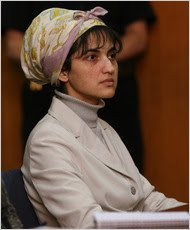
Award Winner